Project overview
Founded in 1886, the Royal Conservatory of Music (RCM) is the cornerstone of music education in Canada. Its home, the TELUS Centre for Performance and Learning in Toronto, was designated a National Historic Site in 1995 and includes 77 practice and teaching studios and Koerner Hall. RCM's mission is to develop human potential through leadership in music and the arts.
To extend the reach of its successful in-class early childhood programs, RCM wanted a custom app for new parents. The app would use the latest neuroscience research and teaching methods to offer activities for parents to do with young children, set to classical music scores. These activities promote healthy interaction while introducing a new audience to the RCM catalogue and brand.
A critical design principle was to not promote screen use. The app teaches the activities, supplies the musical accompaniment, and gives parents a chance to learn the science behind the actions.
My role
I provided creative direction and primary user research, managed the project, and worked directly with RCM to make strategic business and monetization decisions. My team of three designers and two developers worked alongside RCM's external talent for voiceovers and subject matter experts in neuroscience and teaching strategy.
Research strategy
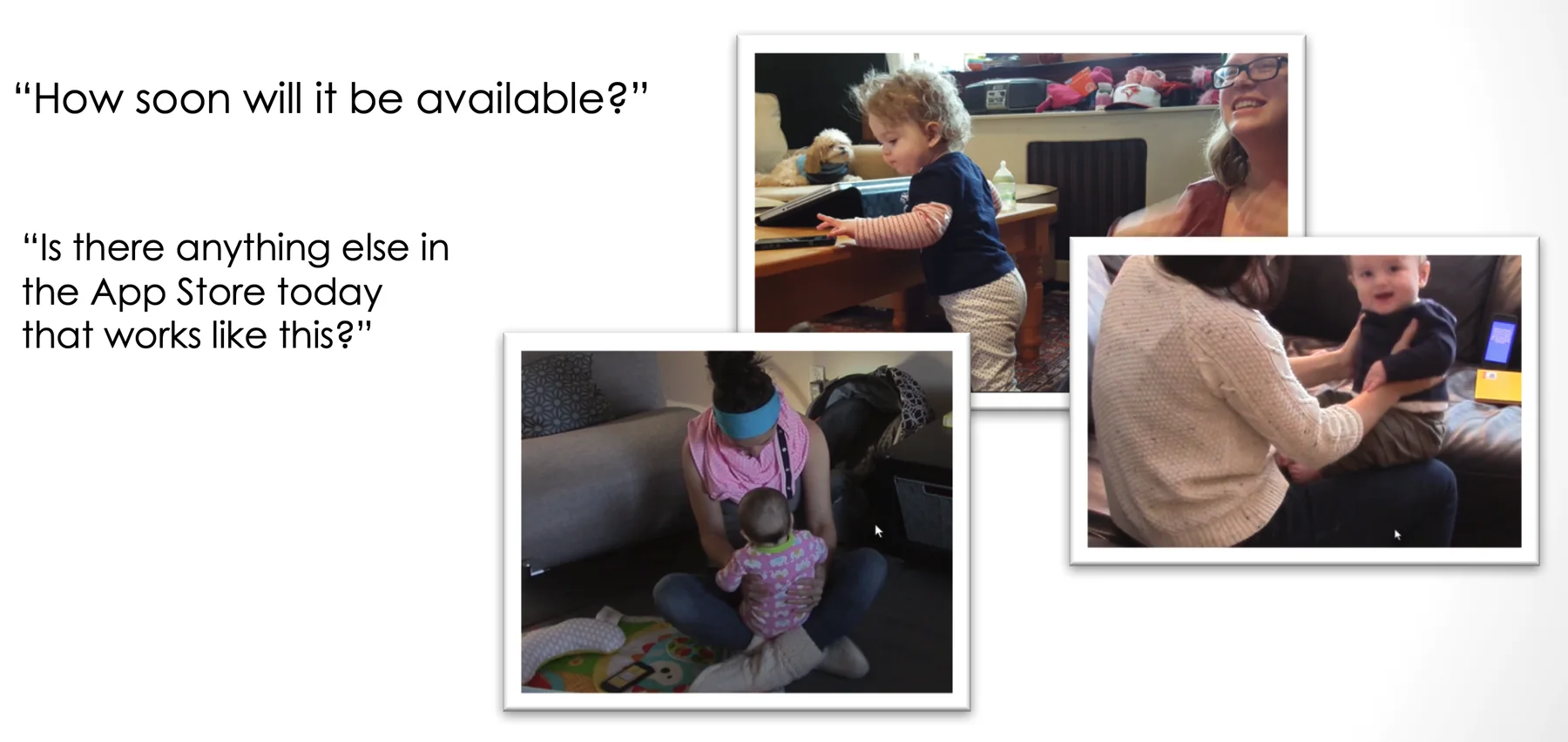
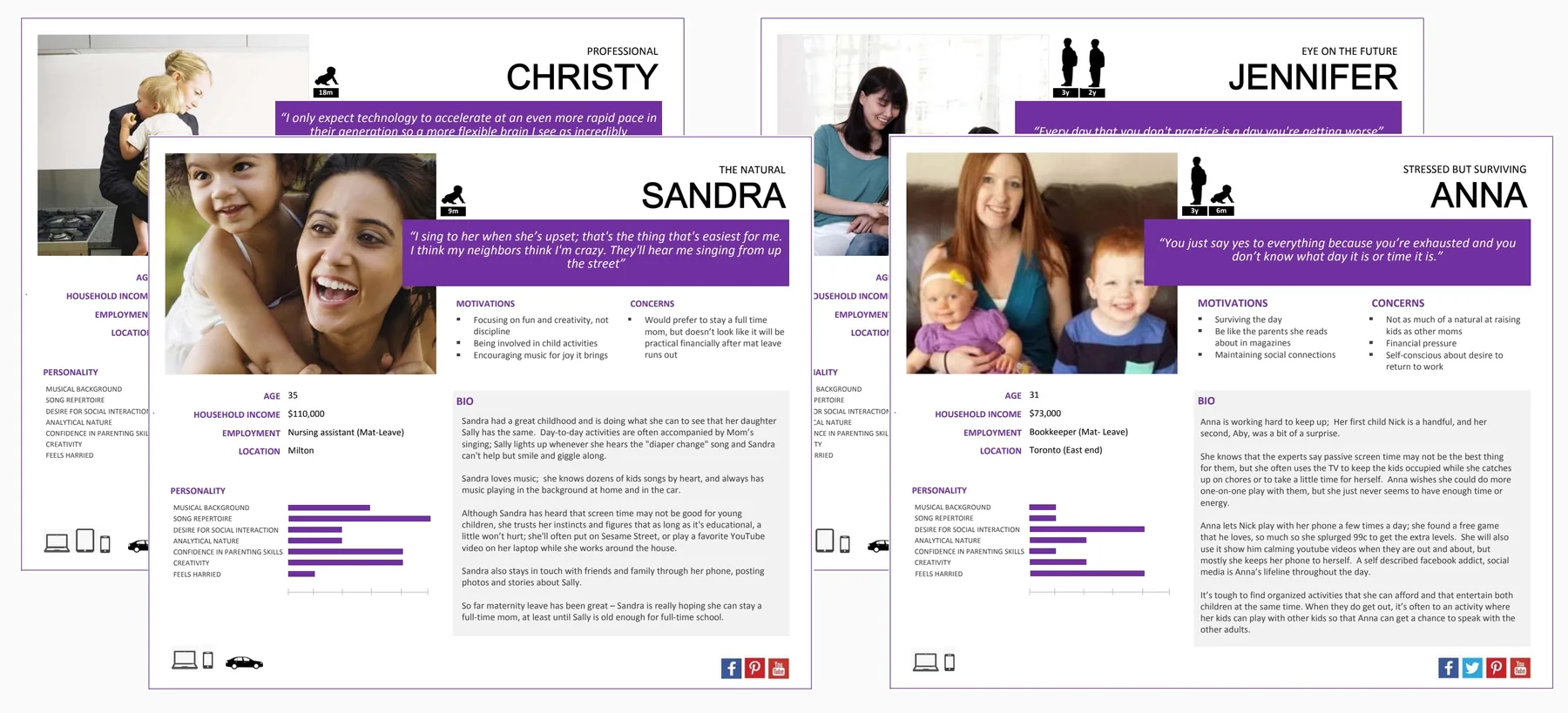
A successful app required understanding new parents and the harried nature of their days. We ran one-on-one research sessions with new parents in their homes to learn about routines, daily drivers, and feelings toward the RCM brand. We also audited RCM's existing in-person classes to see where people connected with the material quickly and where an instructor needed to step in.
As we designed and built, we repeated the in-home visits to test and validate our work, pivoting when needed. This let us address key issues quickly, such as ensuring the device supported the parent's actions rather than drawing the child's attention. We supported that with fine-tuned audio cues, screens that go dark during sessions, and learning modules separated from the activities.
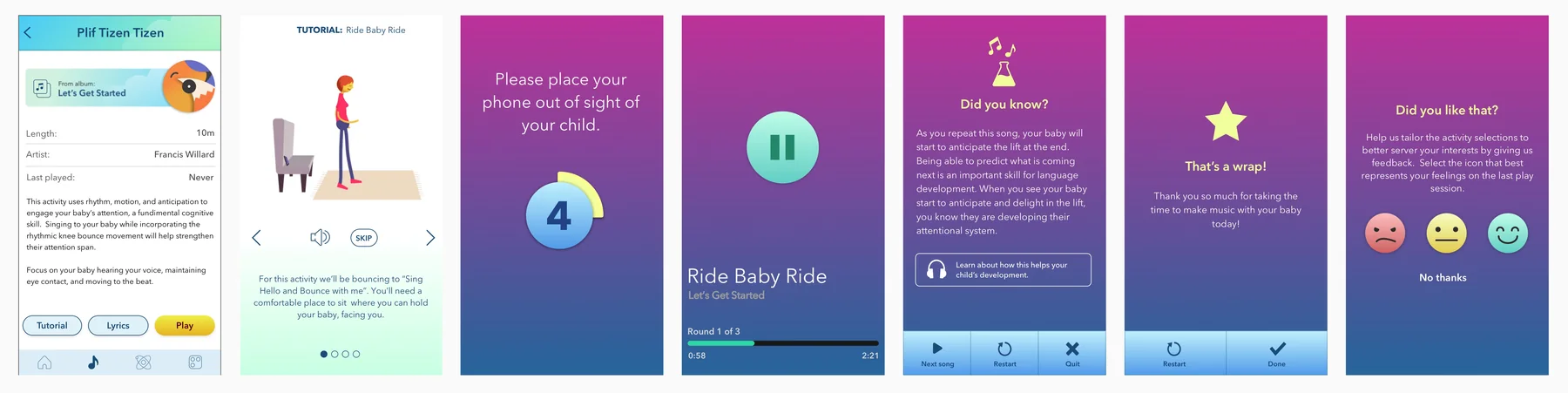
User flow in the MVP
Our audience was busy, tired, and short on time that arrives in starts and stops. We built a design that encouraged return visits while supporting sessions of different lengths. No special equipment was needed, and every activity encouraged interaction between parent and child while avoiding any use of the phone beyond playing the accompanying music. The play structure included:
- Quick introductory animations to watch before starting.
- Metronome sounds for timing.
- Audio cues for the start and stop of each patterned action.
- Sing-along voiceovers with a choice of male, female, or both voices for harmonizing.
Reasons to return
RCM intended the app as the first touchpoint with future music lovers, so stickiness mattered. We wanted a bridge from infancy and early childhood to ages three and up, where children could move to other RCM apps. Through testing and tuning, we landed on a multifaceted strategy:
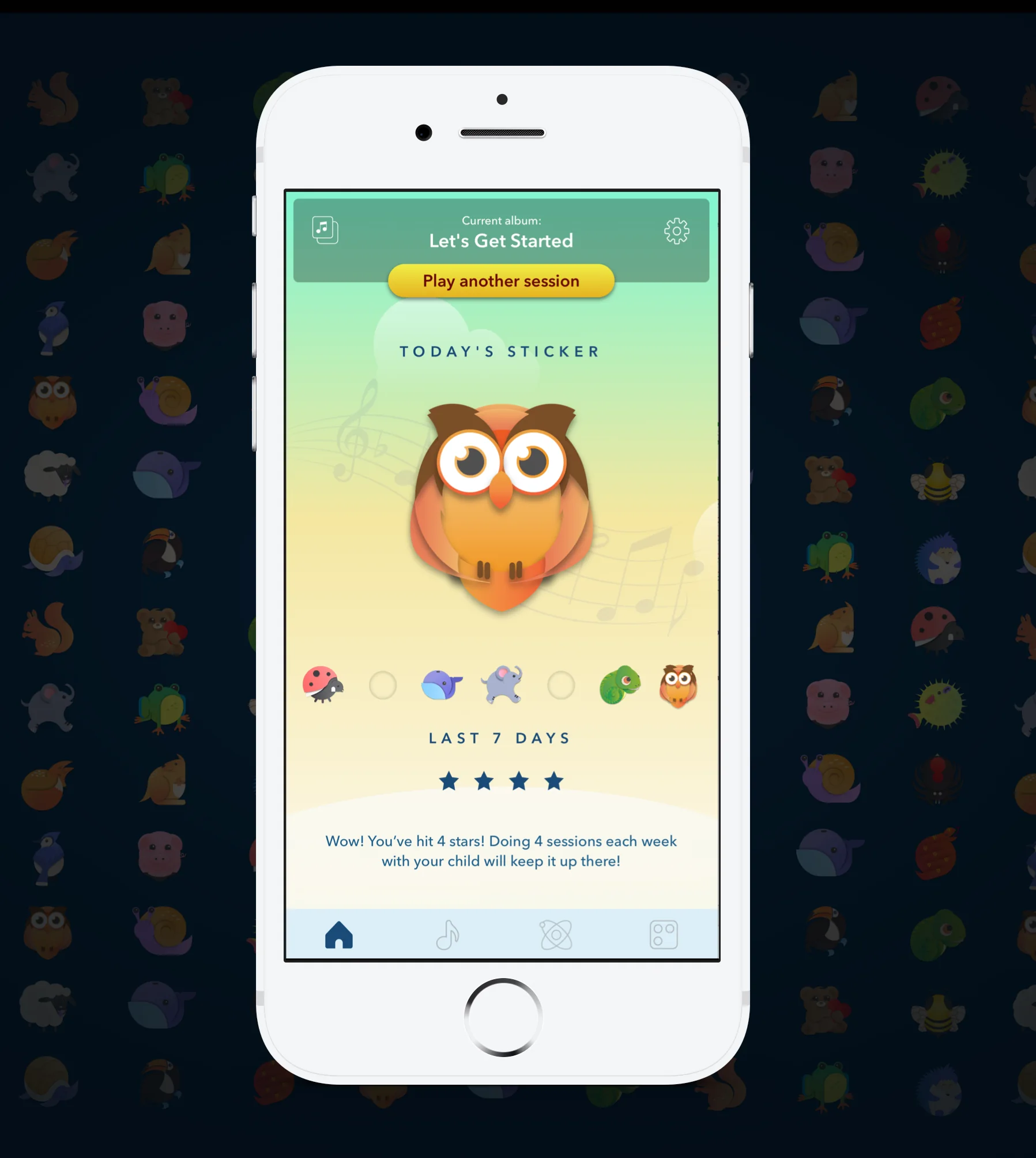
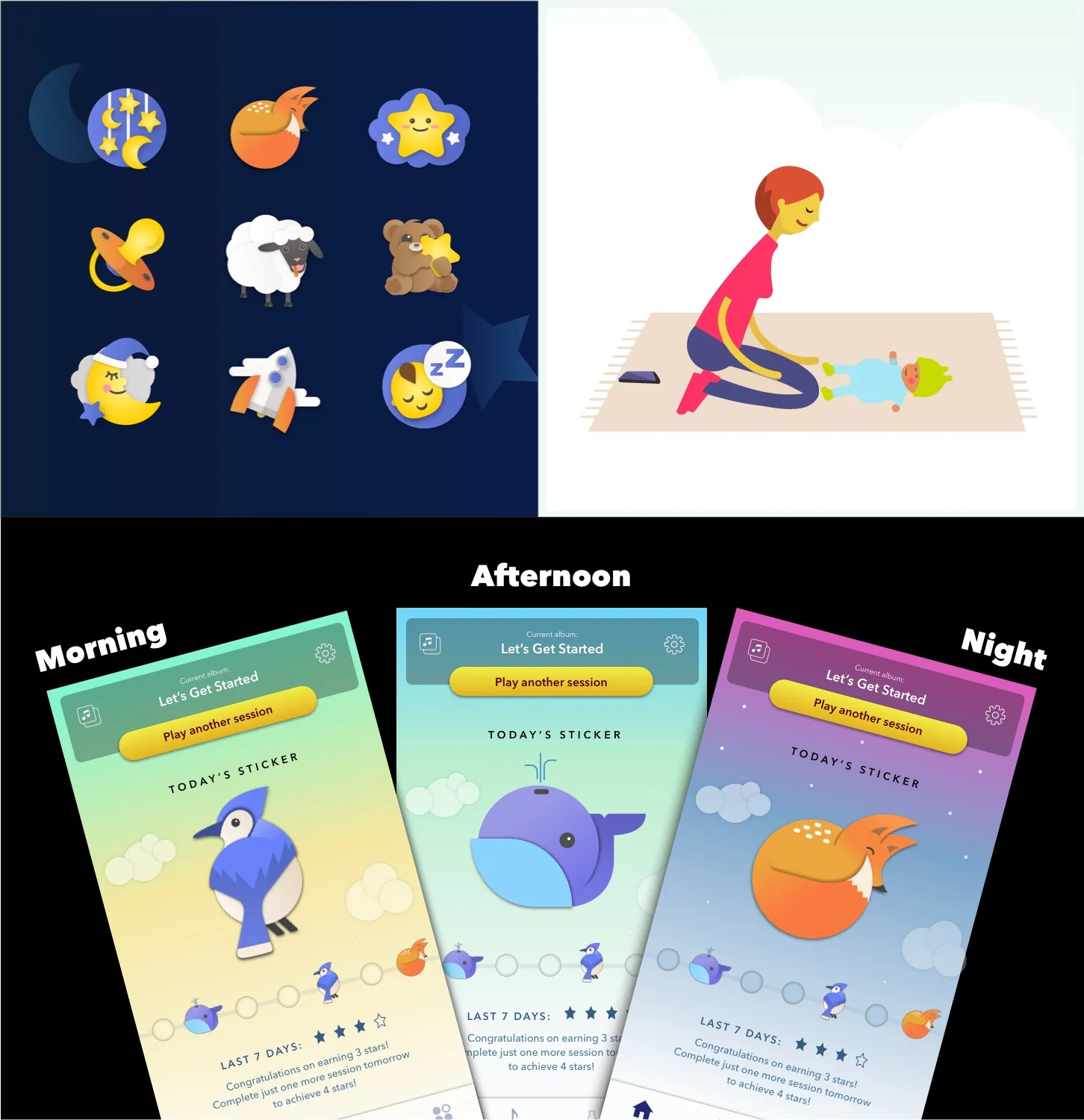
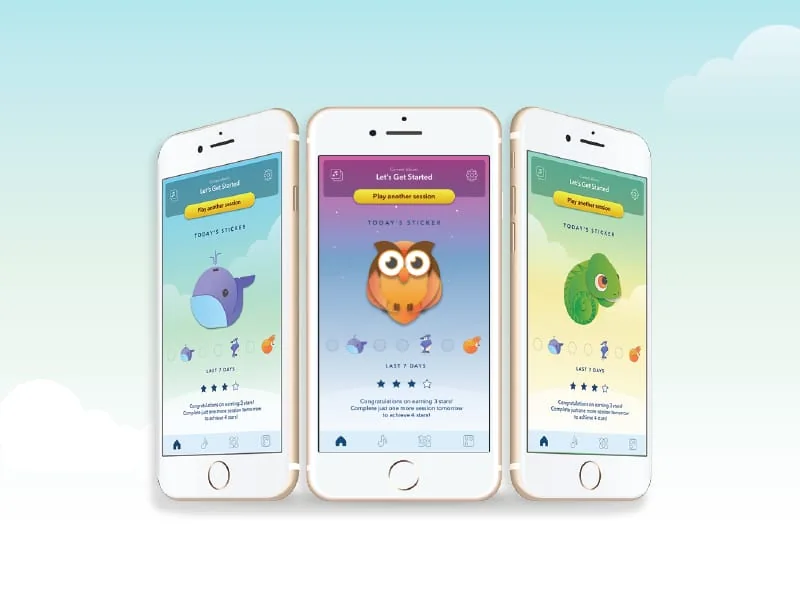
- Collectable rewards. Stickers and badges earned through engagement.
- Streaks and bonuses. Rewards for patterned use at regular times, such as bedtime routines.
- Moments of delight. Friendly, custom-crafted character animations.
- Time-of-day colour. Display colours that shift between morning, evening, and overnight, introduced before iOS offered light and dark modes.
- Science bites. "Did you know?" facts that unlock longer articles and podcasts for parents to enjoy after the child is asleep.
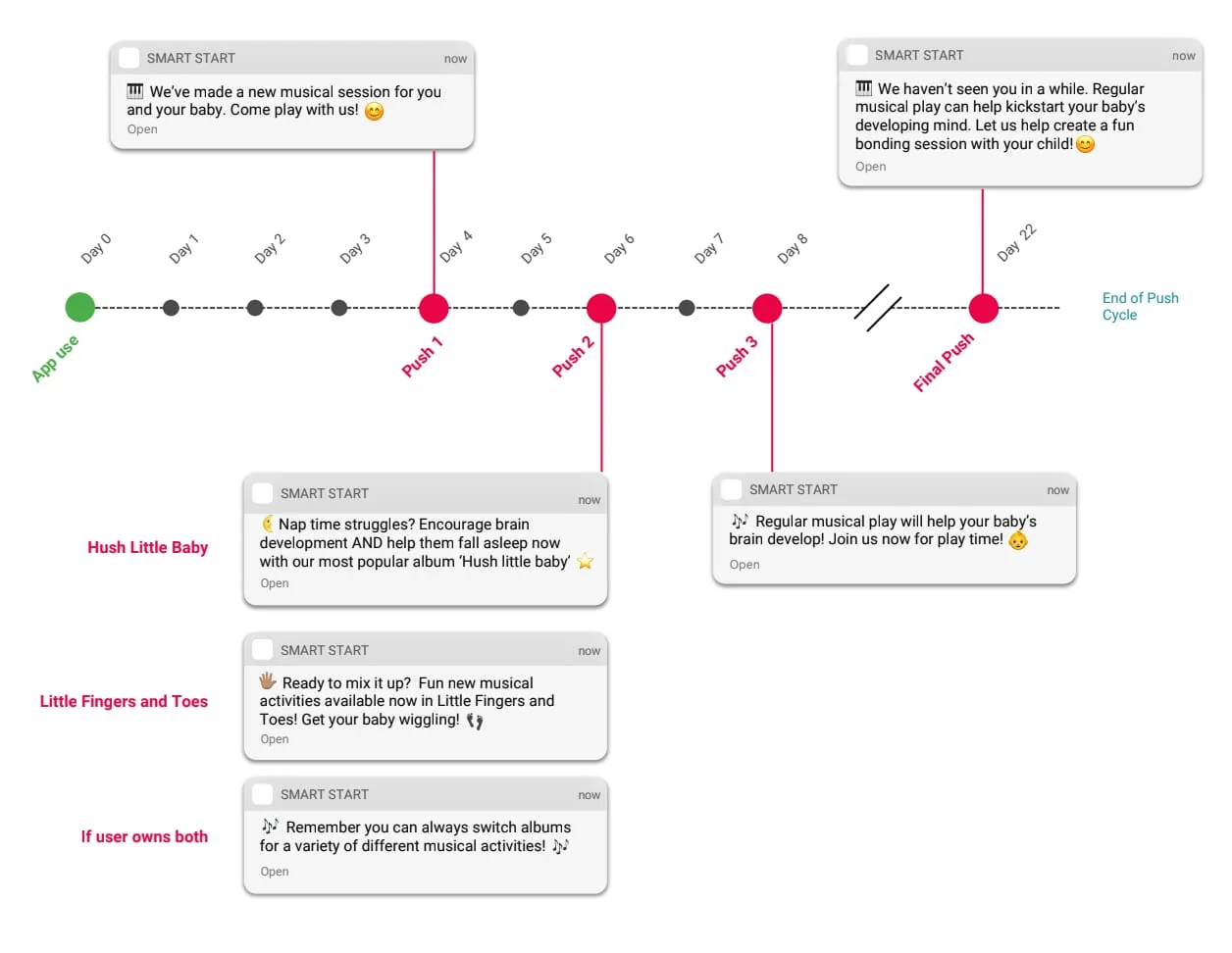
- Gentle nudges. Notifications for inactive users.
Impact and results
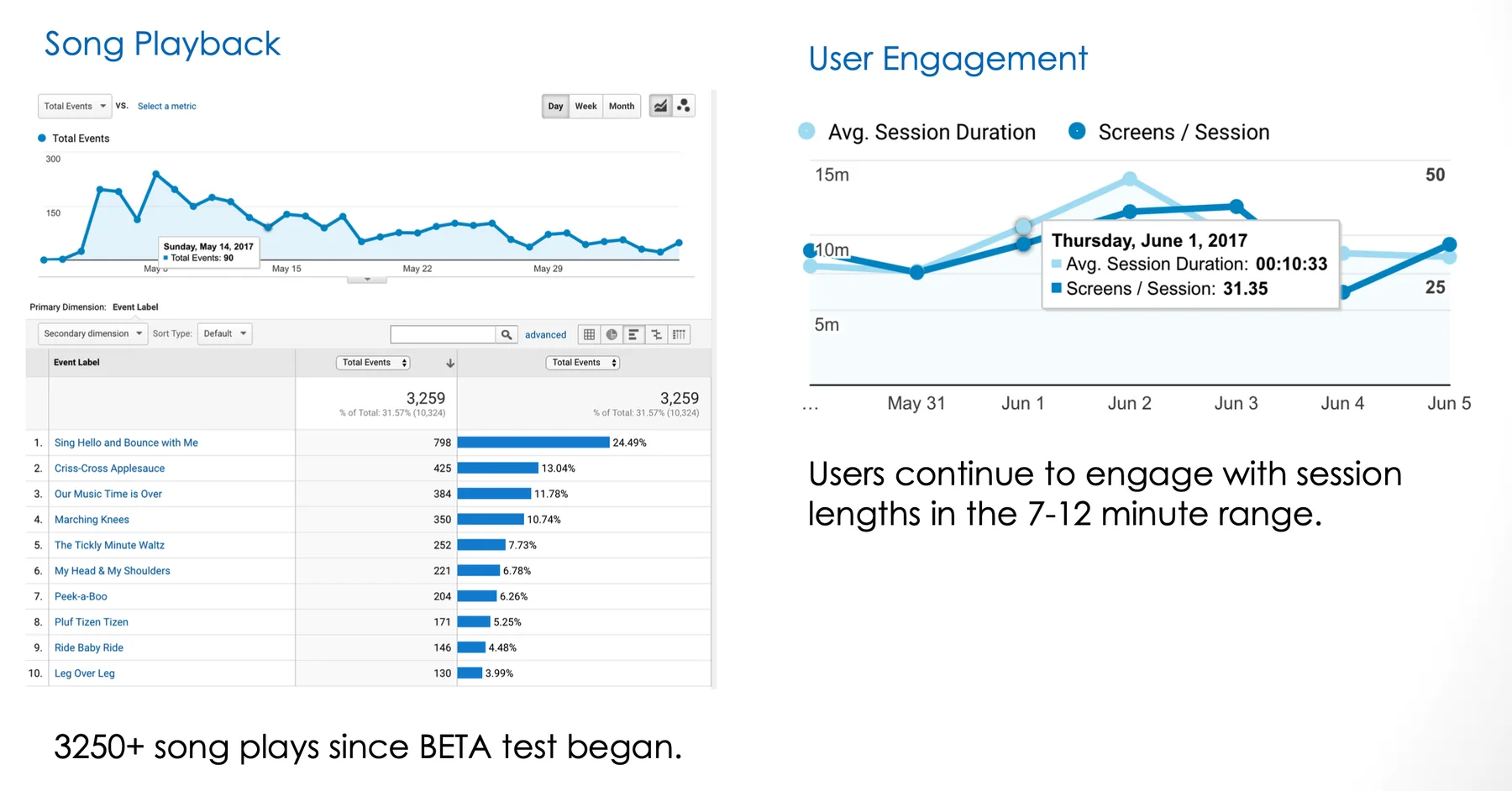
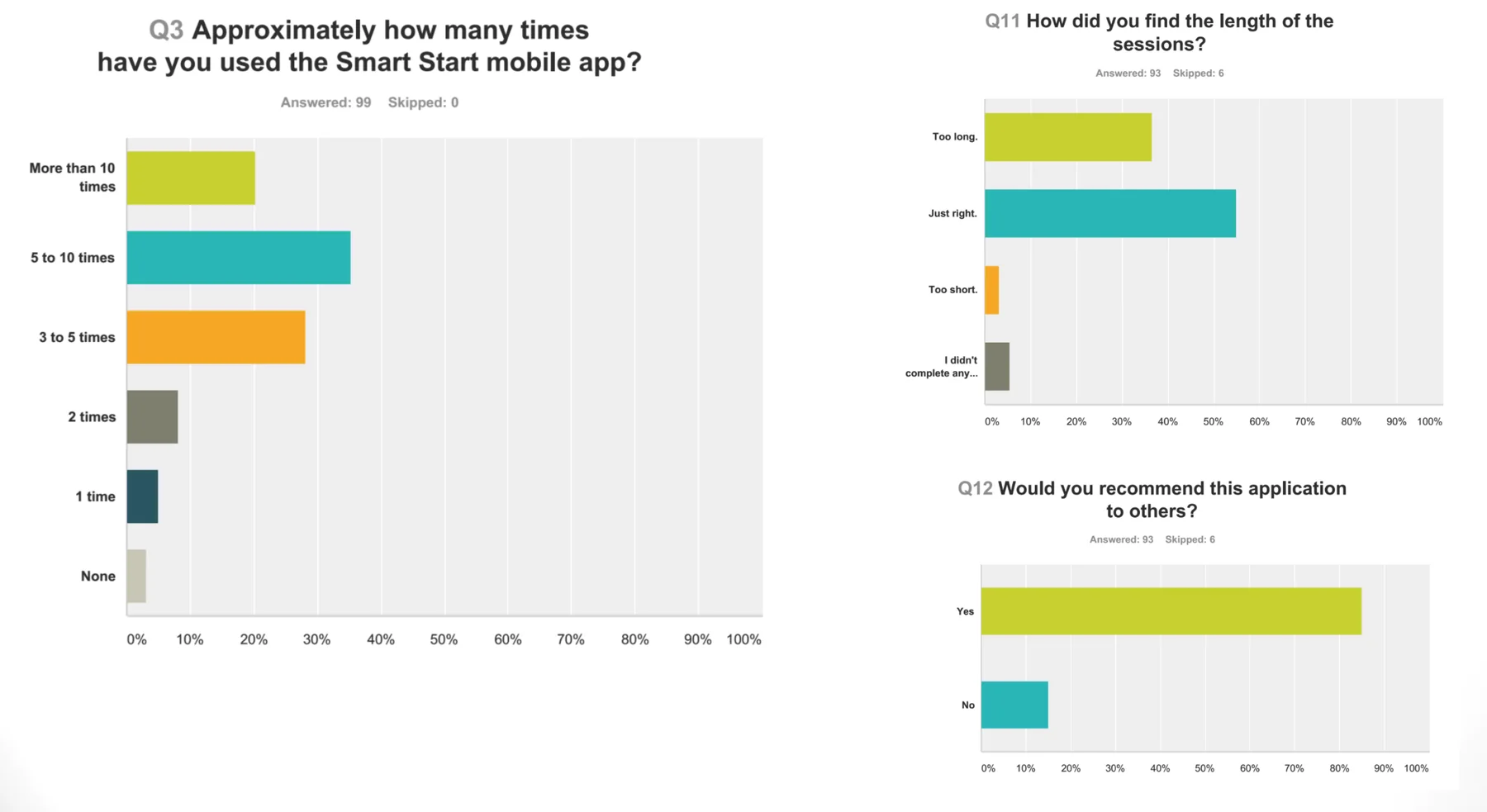
The app was popular with parents and children, created regular repeat engagement, and earned a 4.5 out of 5 app store rating. After completing one session, 85% of parents returned for multiple sessions during the week. The app grew from a single included album to three additional album bundles for purchase, and early data showed that roughly half of all returning users purchased at least one additional album, with the majority buying several.
After two years in the app store, RCM decided to remove the app to focus its efforts on its traditional music certificate program.
Leadership perspective
- Design for the context of use. Success meant a product that gets out of the way of the parent and child. Restraint was the feature.
- Engagement is designed, not hoped for. Rewards, rhythm, and reasons to return were tested and tuned with real families.
- Tie product to the business model. Monetization decisions made with the client from the outset produced measurable purchase behaviour.