Project overview
D1G1T is an ambitious FinTech company set on remaking the standard for wealth management. Its SaaS platform covers the entire advisory lifecycle: client onboarding, client management, portfolio management, trading, reporting, compliance, and business management.
D1G1T wanted a team to take its early concept prototypes, extend them, create a formal design system, and work with D1G1T and its clients to understand today's processes. The goal was a complete end-to-end platform for running advisory businesses, with real-time data in an easy-to-understand interface, deeper analysis and recommendation capabilities, access for the whole advisory team, client views, and native mobile apps for investors, plus transition strategies for moving clients off existing systems.
My role
I led this client engagement for approximately six years, from 2017 to 2023, focusing primarily on design for the D1G1T Wealth Management platform and the investor iOS and Android apps. I worked closely with D1G1T's Chief Product Officer and co-founder, as well as its CTO and product team, with regular biweekly touchpoints.
Following agile methods, I broke down the complex processes clients depend on and crafted new designs, components, and workflows to replace Excel and paper-based practices. I contributed as a primary designer, strategist, and team leader, directing a team of UX and UI designers and researchers through two-week sprints. The scope spanned:
A design system built to scale
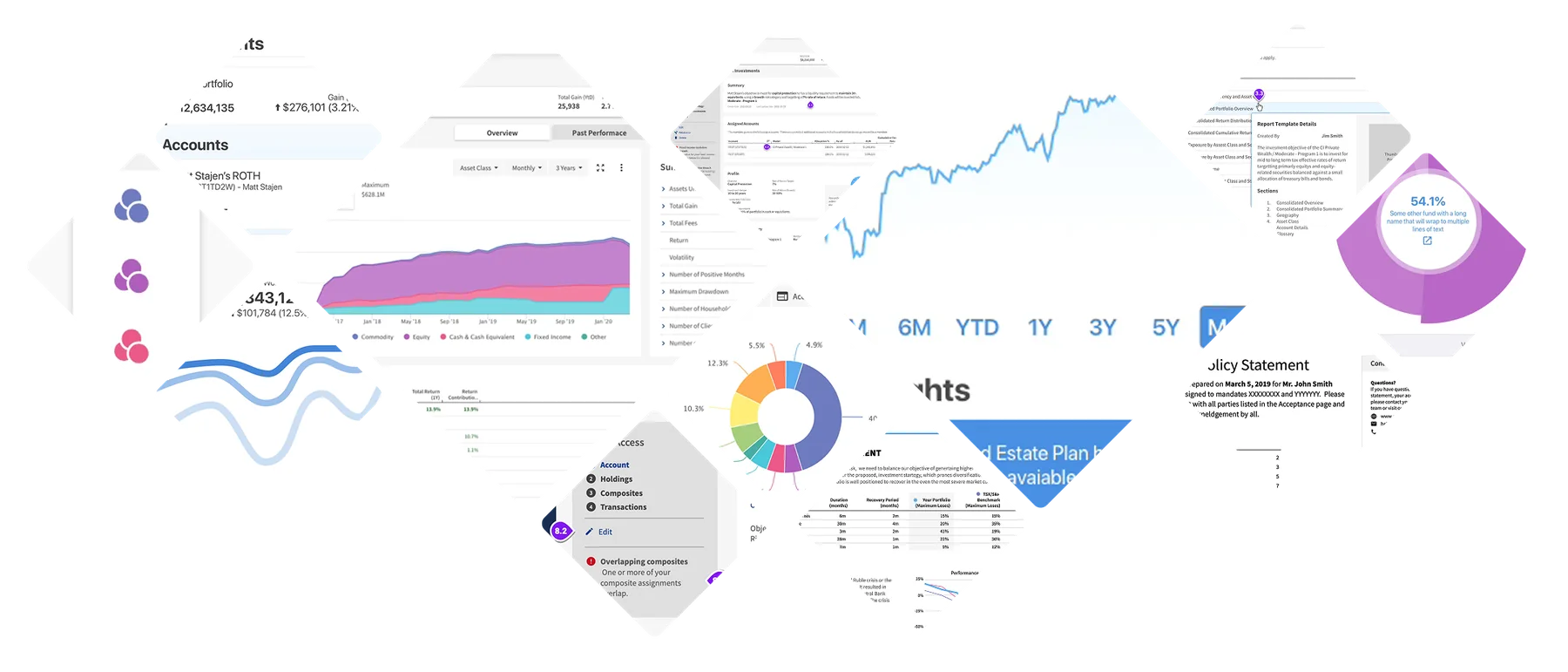
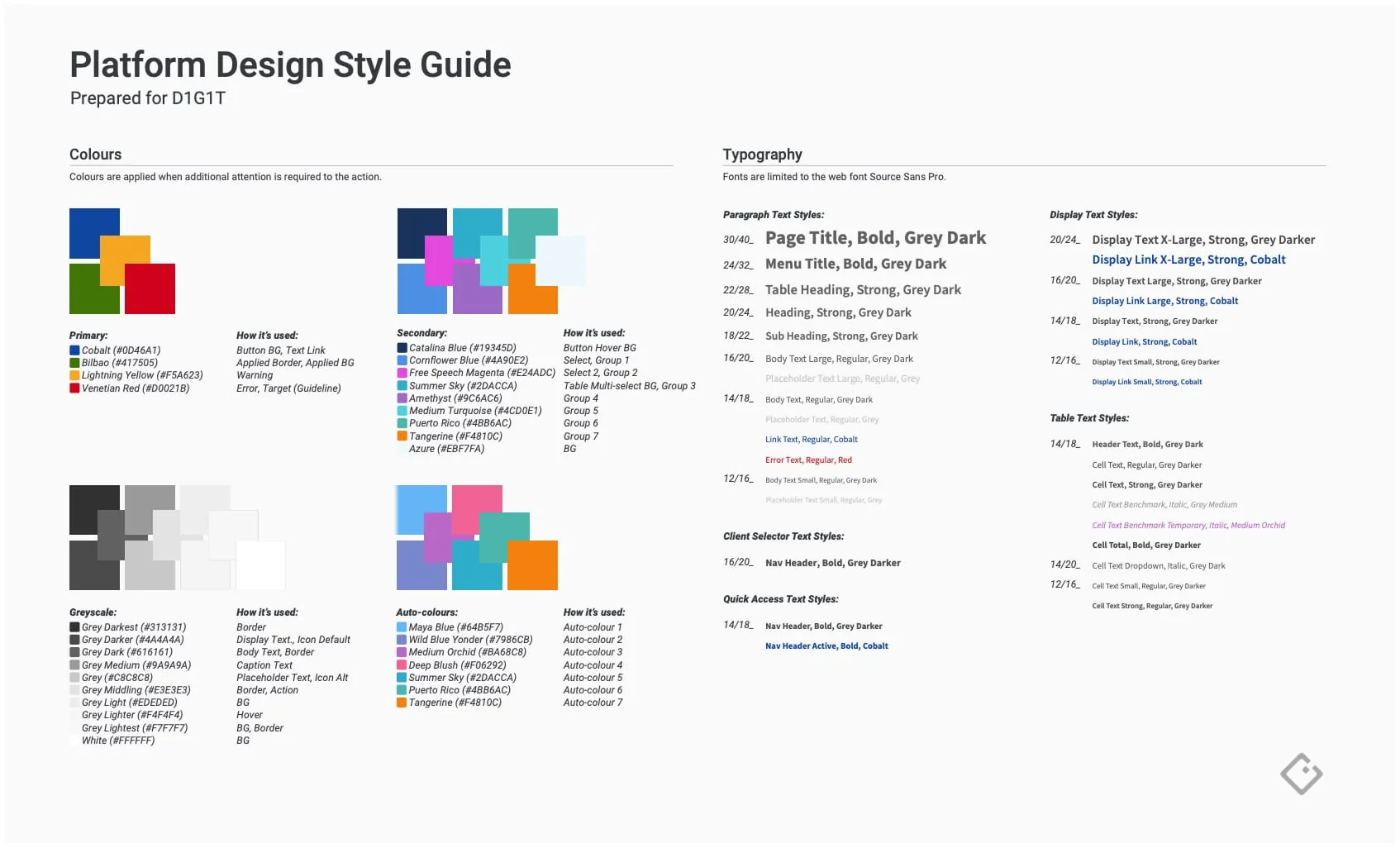
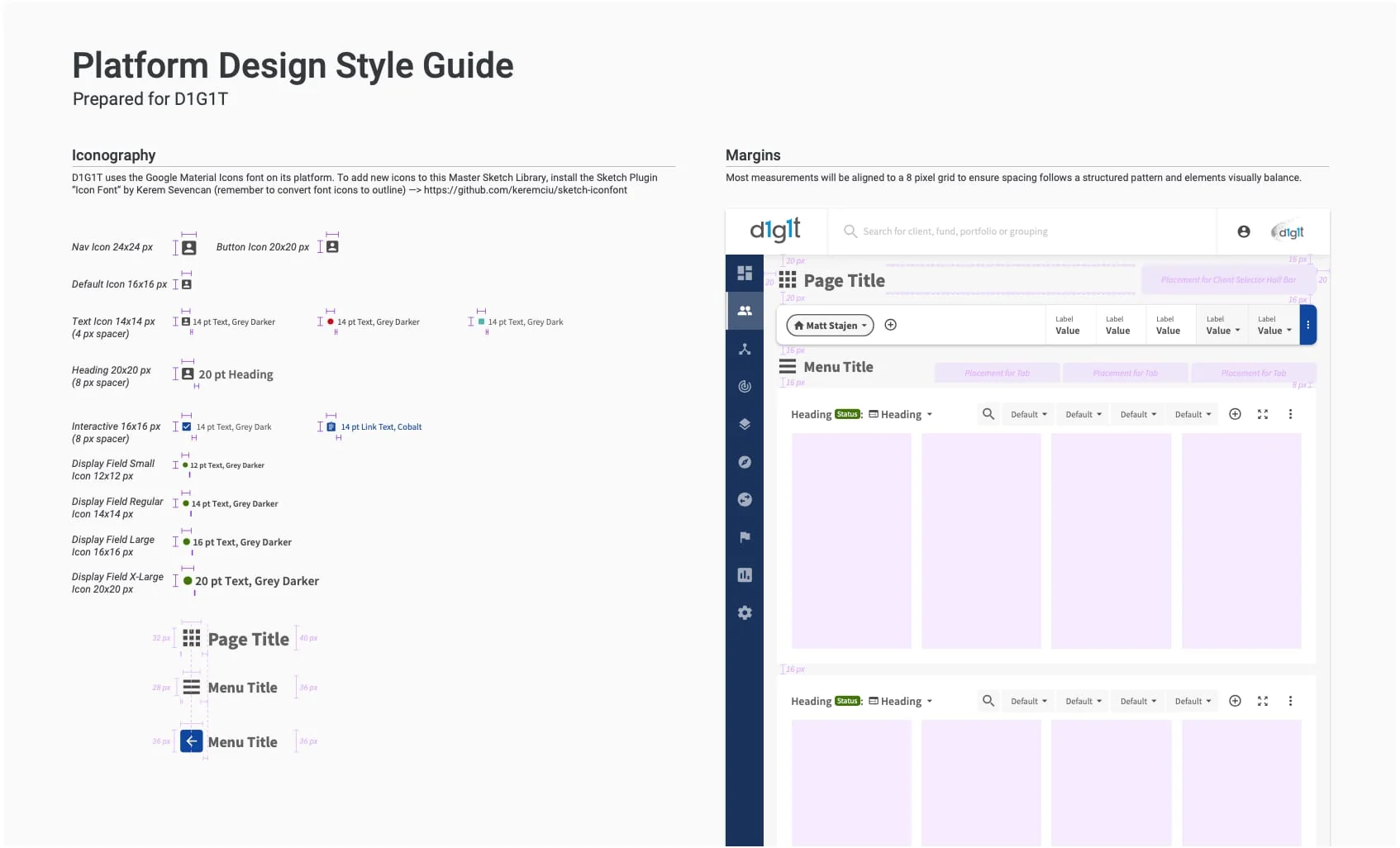
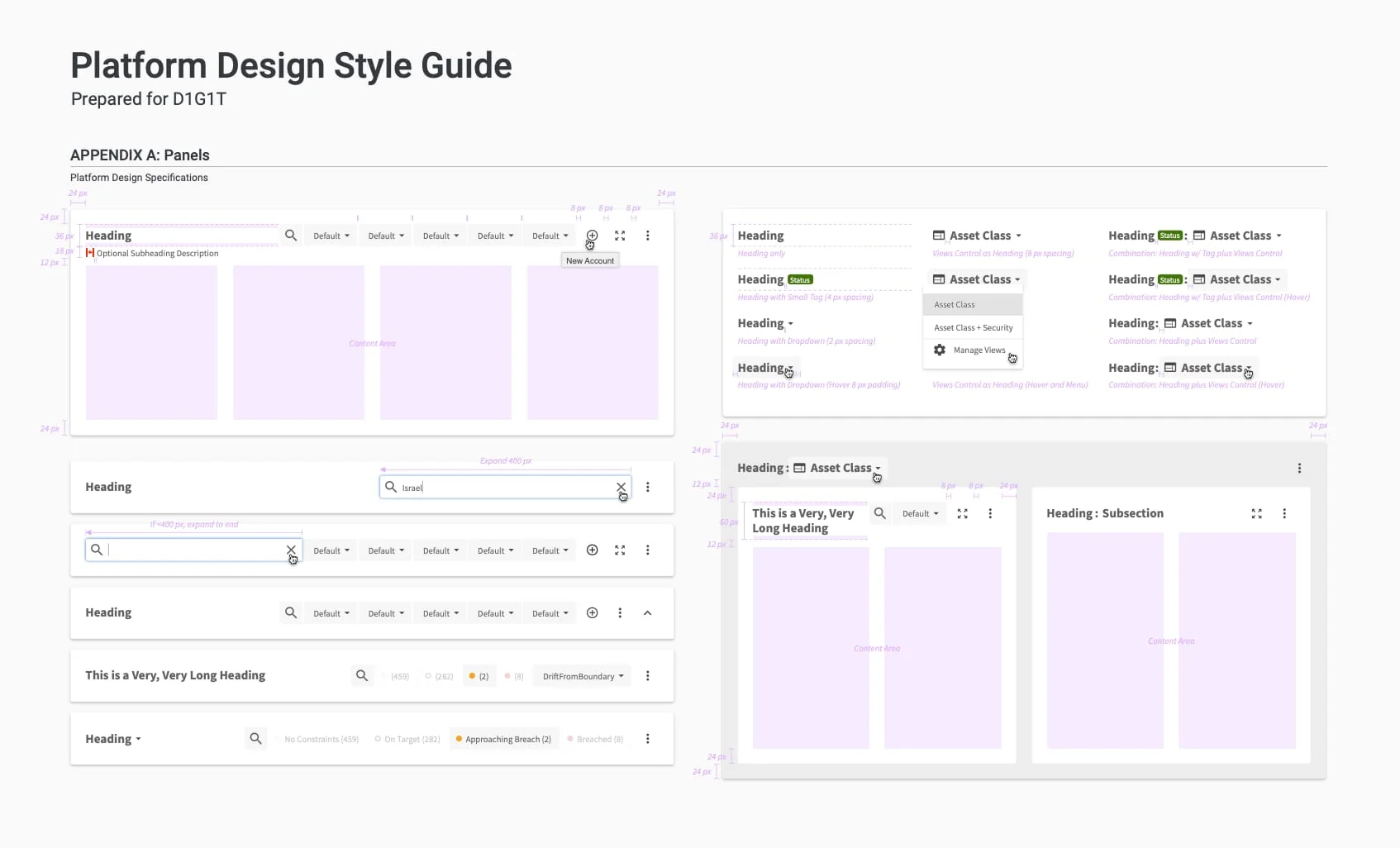
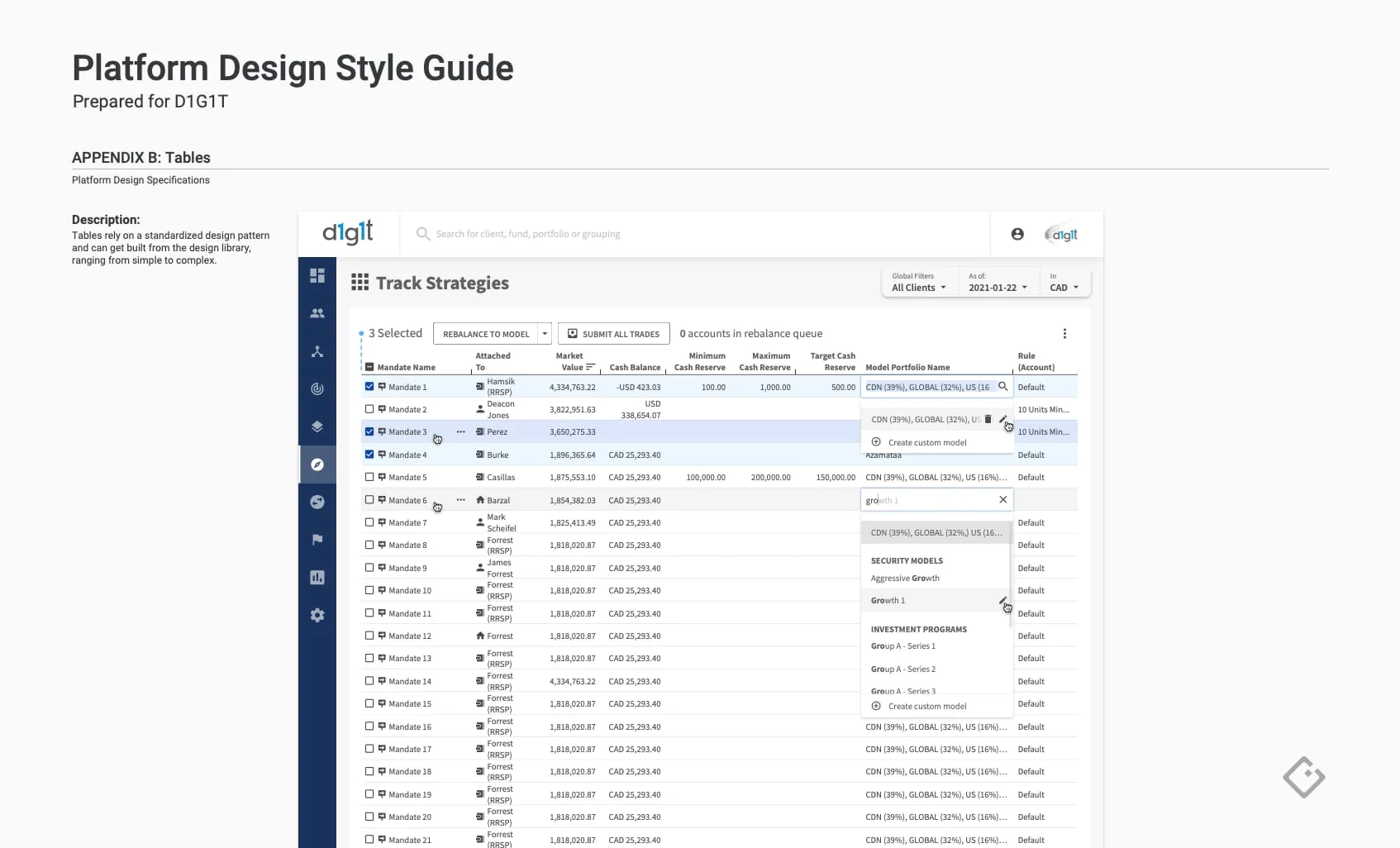
A custom design system was developed for the platform. It optimizes screen space and focuses attention for data-heavy wealth management tasks, and it was critical to designing, prototyping, and building quickly while keeping the experience consistent.
The system rests on scalable, modular components and supports an object-oriented approach at the code level, which allowed the platform to grow as new functions and processes were added. Extensibility has a cost, so we weighed future needs against flexibility that might never be used.
Short research, prototype, and question cycles let us learn what a process or component required, test the concept against similar processes and client needs, and iterate until it was consistent before standardizing. Small cycles during feature design, combined with larger consistency passes, helped us find the right level of flexibility.
Client hierarchy navigation
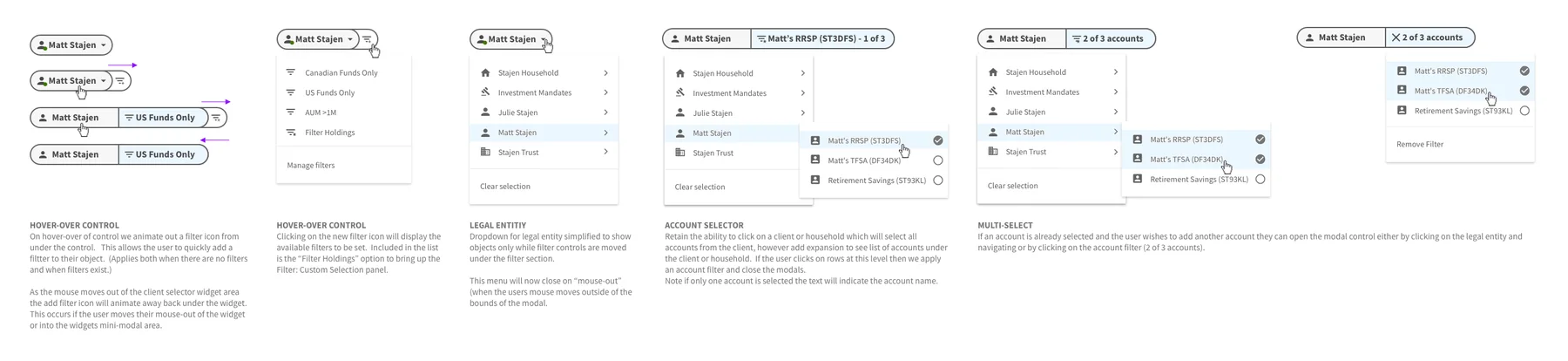
Client relationships are complex: households, clients, accounts, and foundations, all tied to investment mandates. Users needed a simple way to select and filter across them. I designed a common control to be the cornerstone of navigation.
It gives users simple control over advanced filters (predefined and custom), account combination, and hierarchy navigation, and it drives what is displayed on screen. Used in sequence, it can bring separate households together for combined reporting and comparison. The control became core to the entire D1G1T system, on the platform and in the mobile apps.

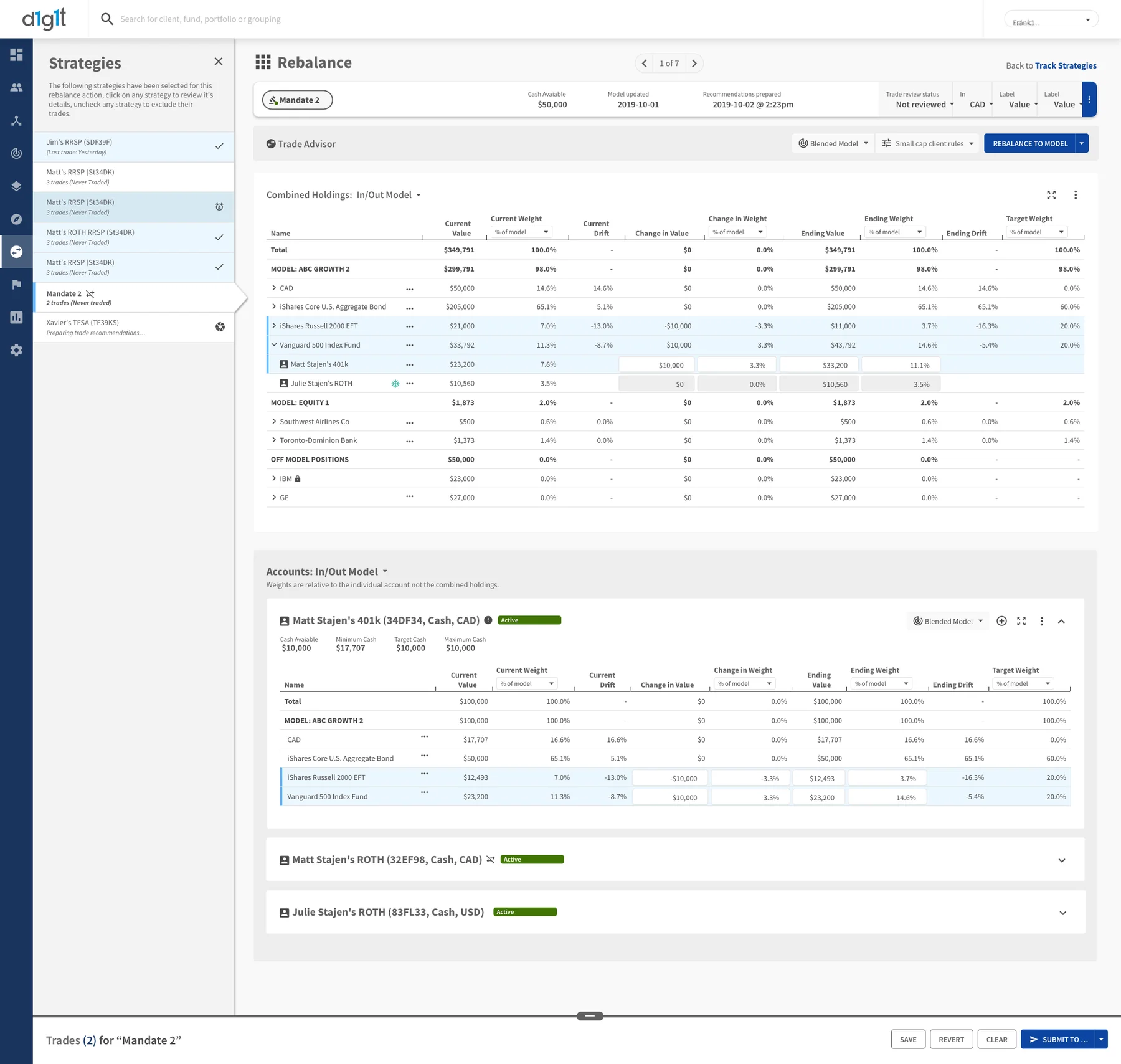
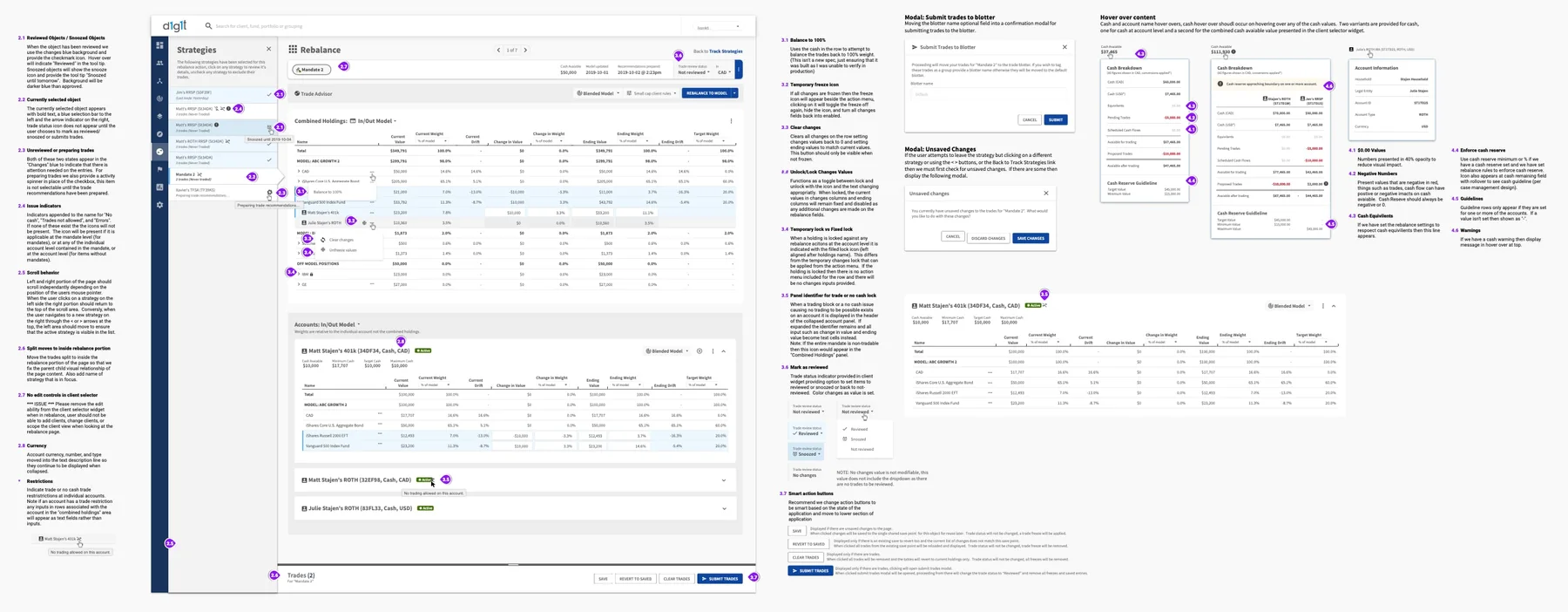
Complex tasks: rebalancing
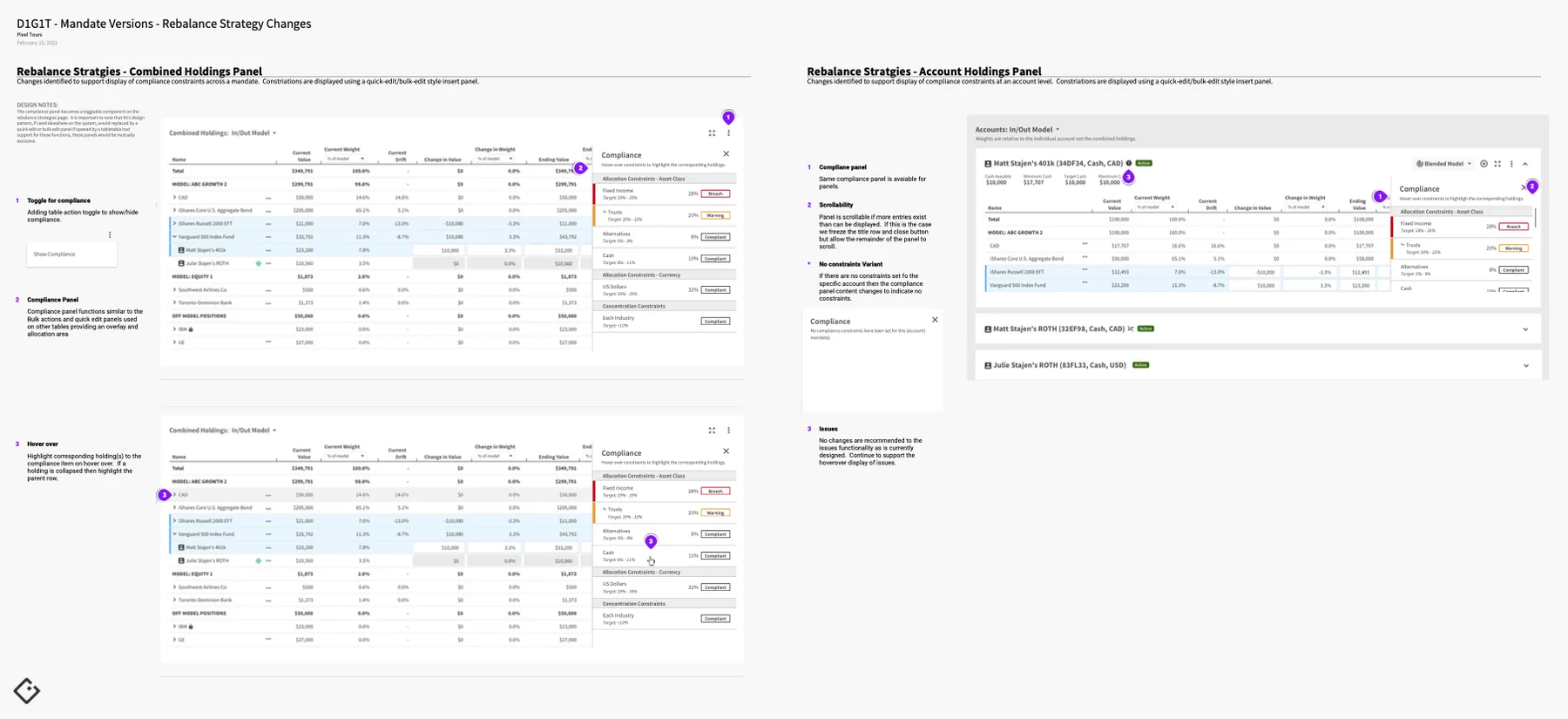
Complex tasks are common on the platform. We aimed for a highly responsive, visually optimized experience, yet many displays require complex calculations and data pulls on every change. Rebalancing is a prime example, requiring regular asynchronous data pulls throughout the interaction.
Working closely with business and development teams, we made deliberate trade-offs between desired behaviour and technical feasibility. Transitional visual behaviours hid processing time and bought additional cycles for calculation without harming the experience. Together with an iterative approach, this produced a highly performant solution to a complex process.
Investor mobile application
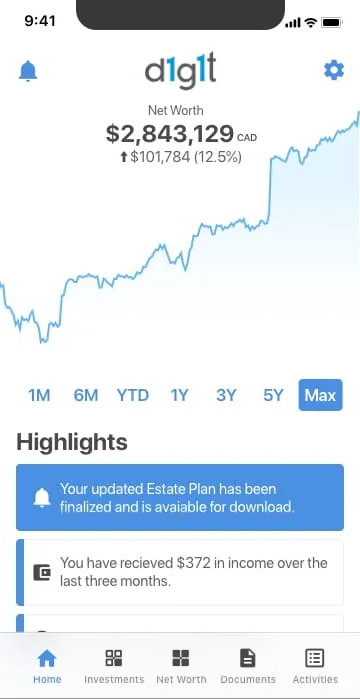
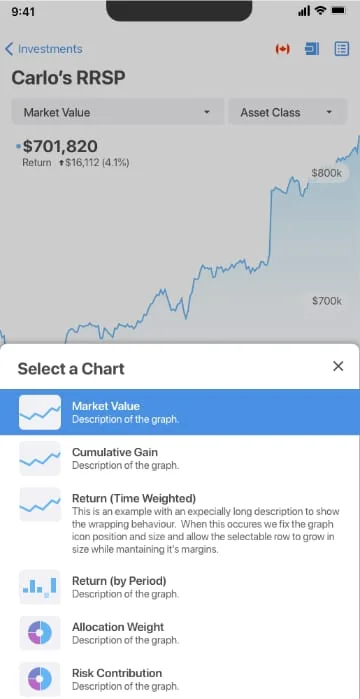
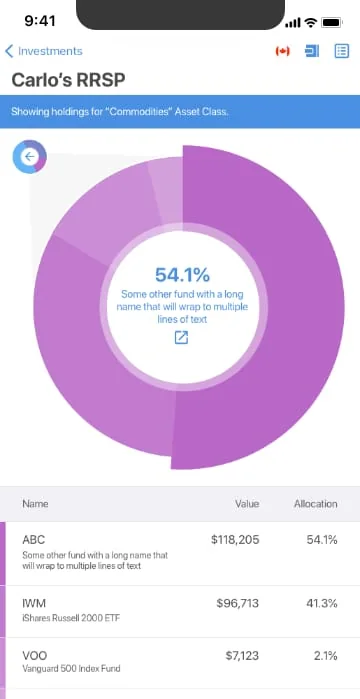
The investor companion app lets investors review their portfolio and documents and quickly connect with their advisory team. It shares a consistent feel with the platform while using native mobile components. Connecting the design system to native controls created a cohesive experience with a low barrier to entry.
Unlike the main platform, the app needed to be white labelled so D1G1T's clients could customize colours, fonts, and logos to their brand. Because the design system was built for extensibility, adding a brandable layer was a small change rather than a major redesign and refactor.
Leadership perspective
- Complexity rewards structure. In data-dense, regulated domains, a design system is a strategic asset: it speeds delivery, protects consistency, and lets a platform grow without rework.
- Trade-offs belong in the open. Working side by side with business and engineering turned technical constraints into design decisions rather than late surprises.
- Build for extension, but not past need. Frequent, small research cycles tested how much flexibility the platform actually required.