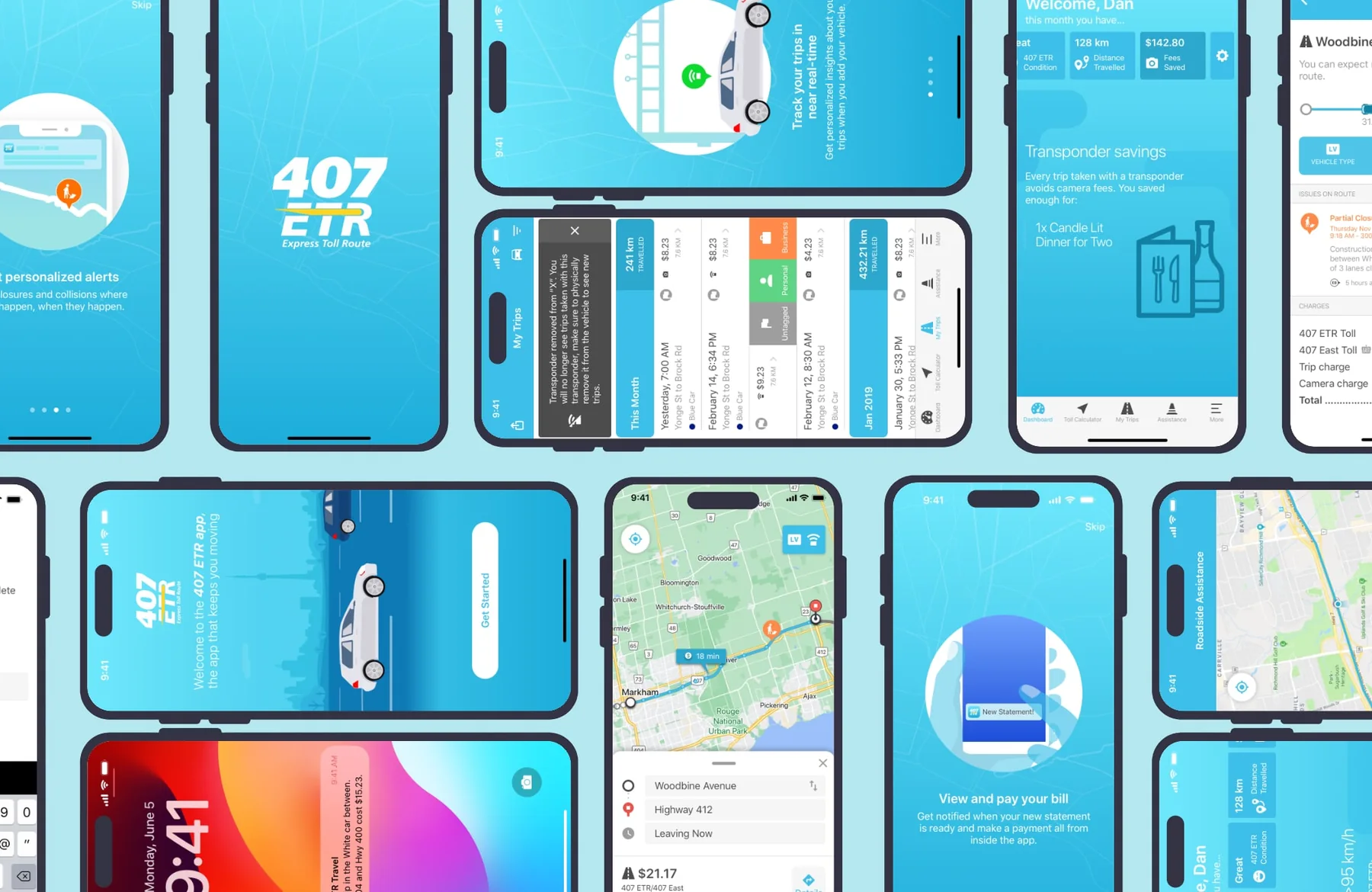
Project overview
407 ETR asked Pixel Tours to take its mail-based service to mobile. The goal was a new, direct communication channel with its customers through a service-industry-leading mobile app. Until then, the relationship ran through monthly paper statements, the call centre, and a web portal that saw most of its traffic after a statement arrived.
A central objective was an app that would draw customers back between statements and create a higher-touch connection. The project delivered native iOS and Android apps integrated with 407 ETR's internal backend, executed in weekly sprints. The first version launched within six months, and the app was continuously improved and extended over the five years of our involvement.
My role
My role grew with the engagement. I began as the sole designer and strategist, and progressed to leading a team of three developers and four designers. My responsibilities included architecture oversight, creative direction, interaction design, user research, client relationship management, and project management.
We worked in an agile rhythm. At the start of each sprint, we met with 407 ETR to define deliverables at a high level, broke them down on our own sprint board, and presented completed work at each sprint demo. Daily collaboration with 407 ETR's internal teams, together with regular research and testing sessions, kept us close to both the product and the customer.
Research: understanding the customer first
We began with interviews across 407 ETR's business units, from sales and the call centre to marketing and technology, to understand the subtleties of operations. Having previously built the company's web portal and B2B portal gave us a head start, but we did not rely on it. With the internal development team, we grouped existing customers into conceptual personas, then scheduled one-on-one calls with actual drivers before refining them.
I believe understanding customers requires both analytics and human conversation. The research surfaced two fundamental truths: customers were sensitive to location tracking and how that information would be used, and they were uneasy about the unexpected size of their monthly bills.
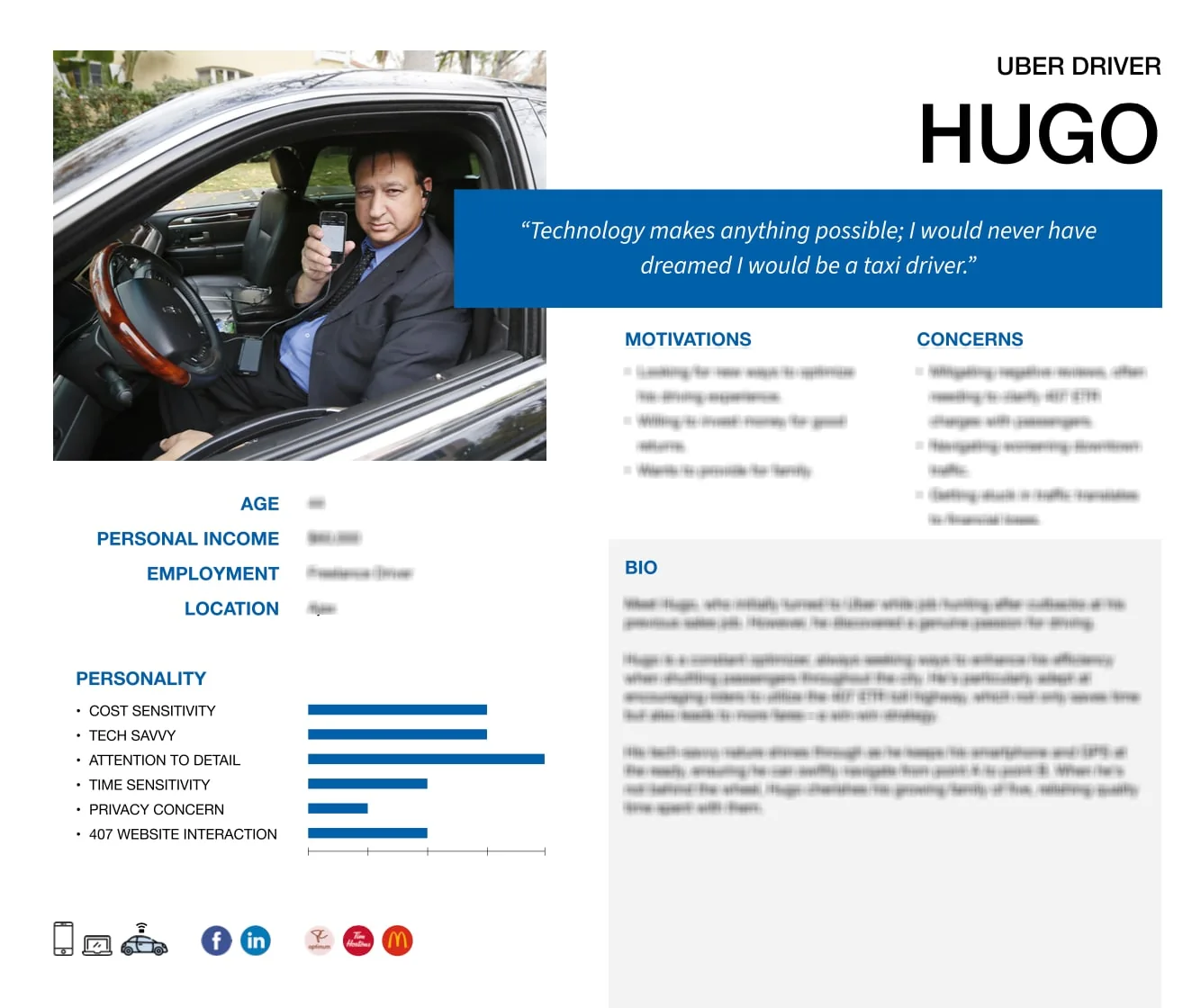
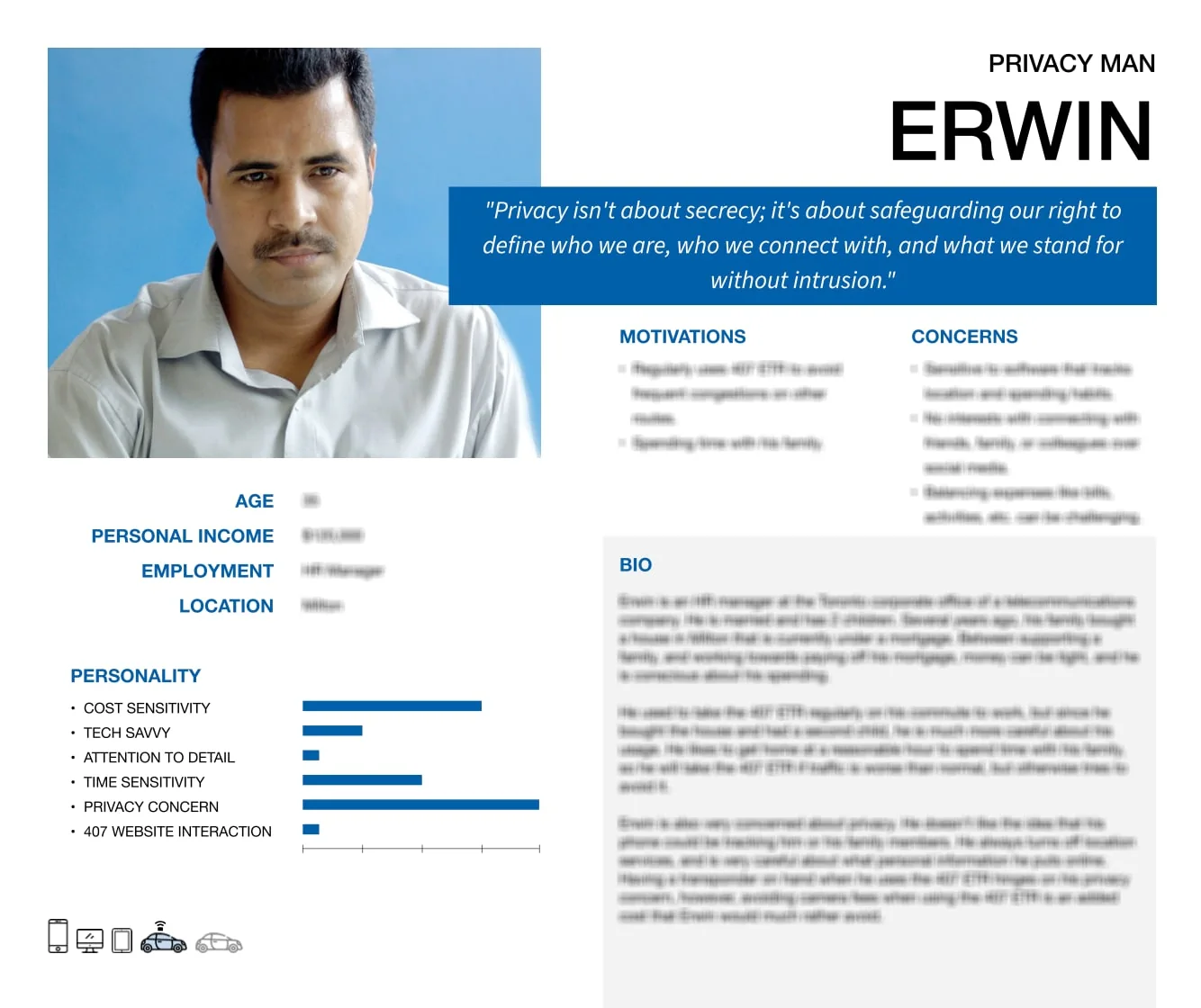
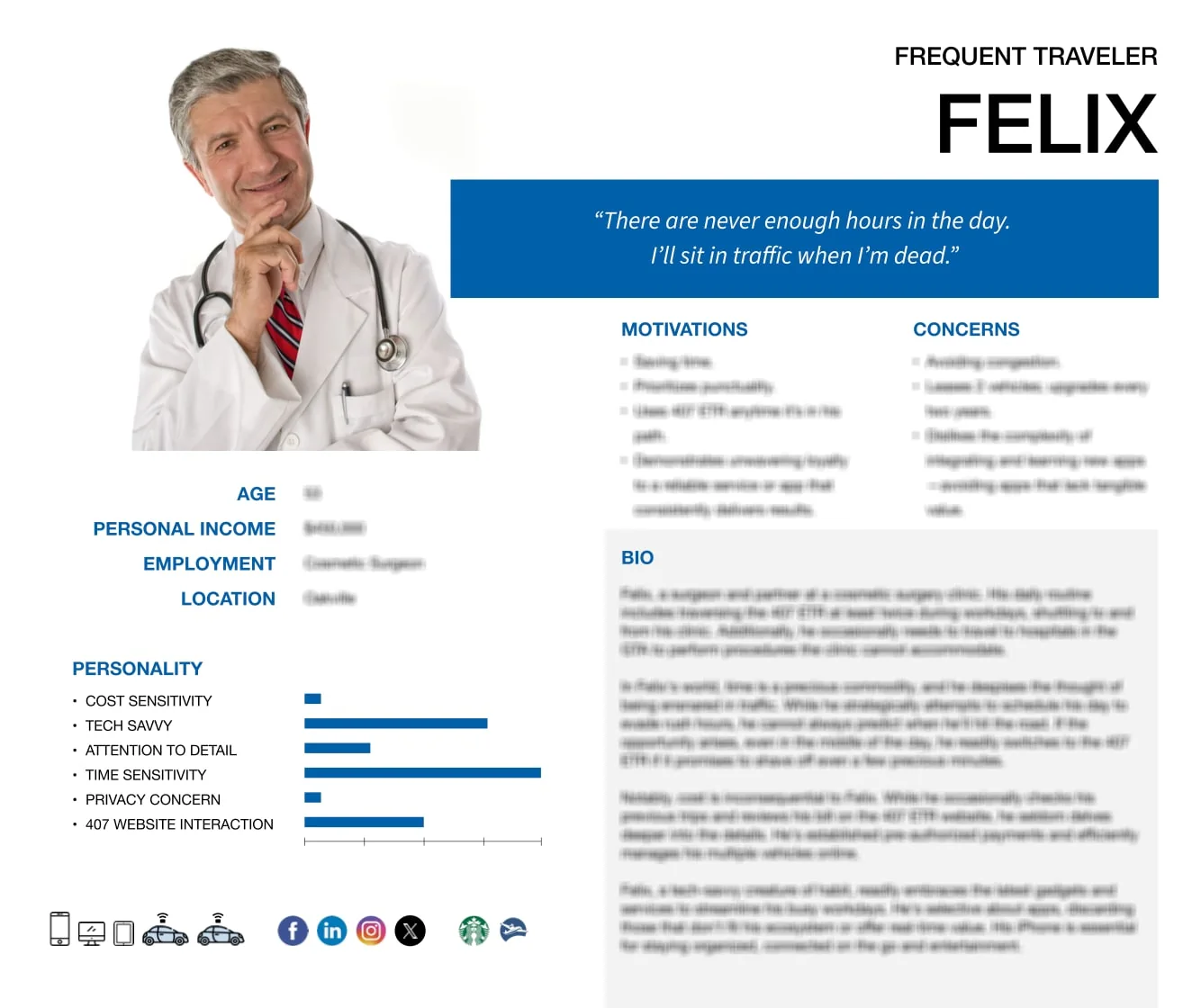
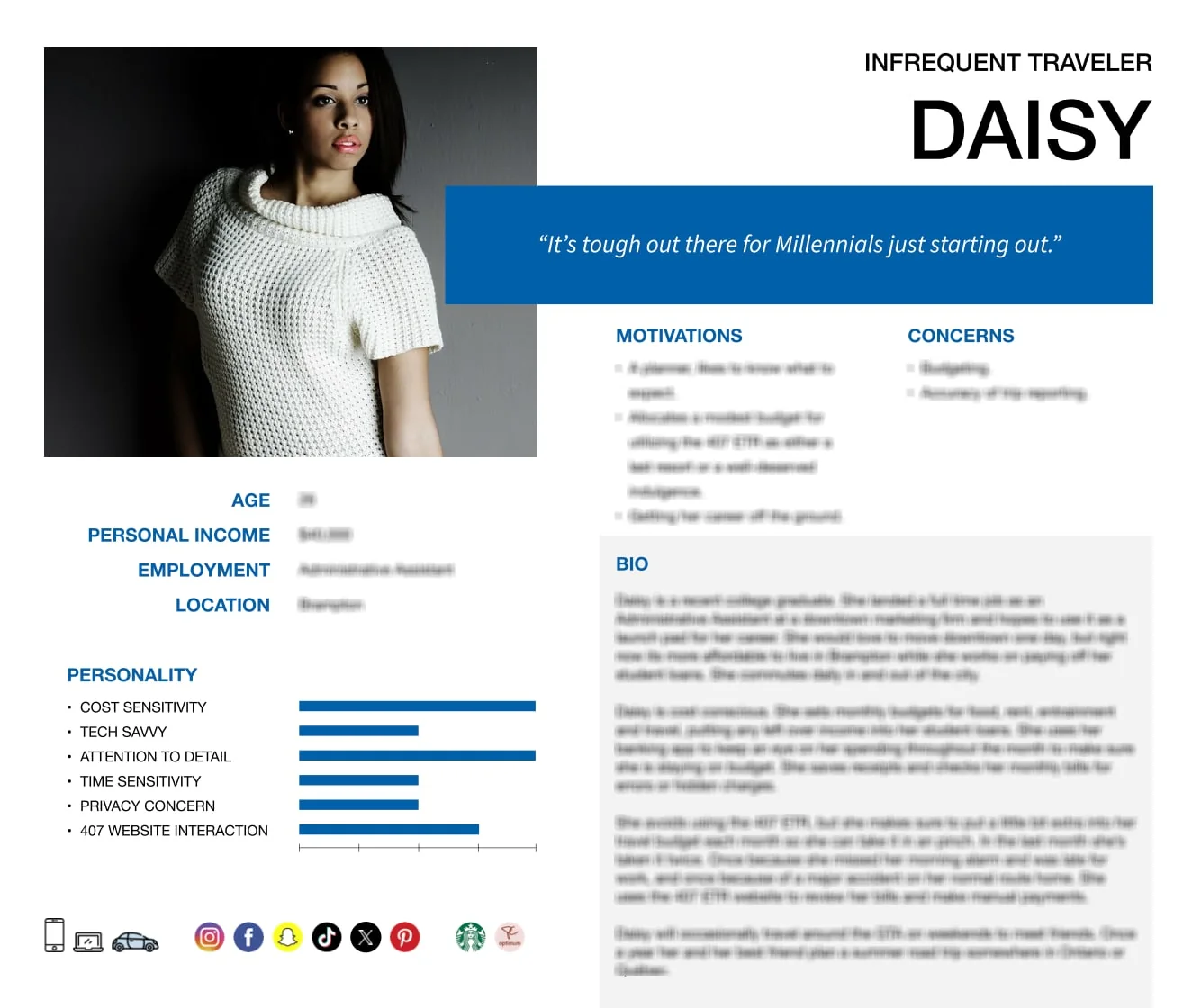
Research did not end with the personas. We built two capabilities into the app that any multi-year product should have:
- In-app customer connection. Inline surveys and questionnaires let us poll customers about their experience at scale, without arranging in-person sessions.
- Analytics. Google Analytics showed how customers used the app and let us test changes against assumptions. It also revealed the device and OS mix of 407 ETR's own user base, which generic market statistics cannot replace.
Building customer confidence
Because uneasiness about toll charges was the key finding, confidence became a design priority. Three capabilities carried that idea into the product.
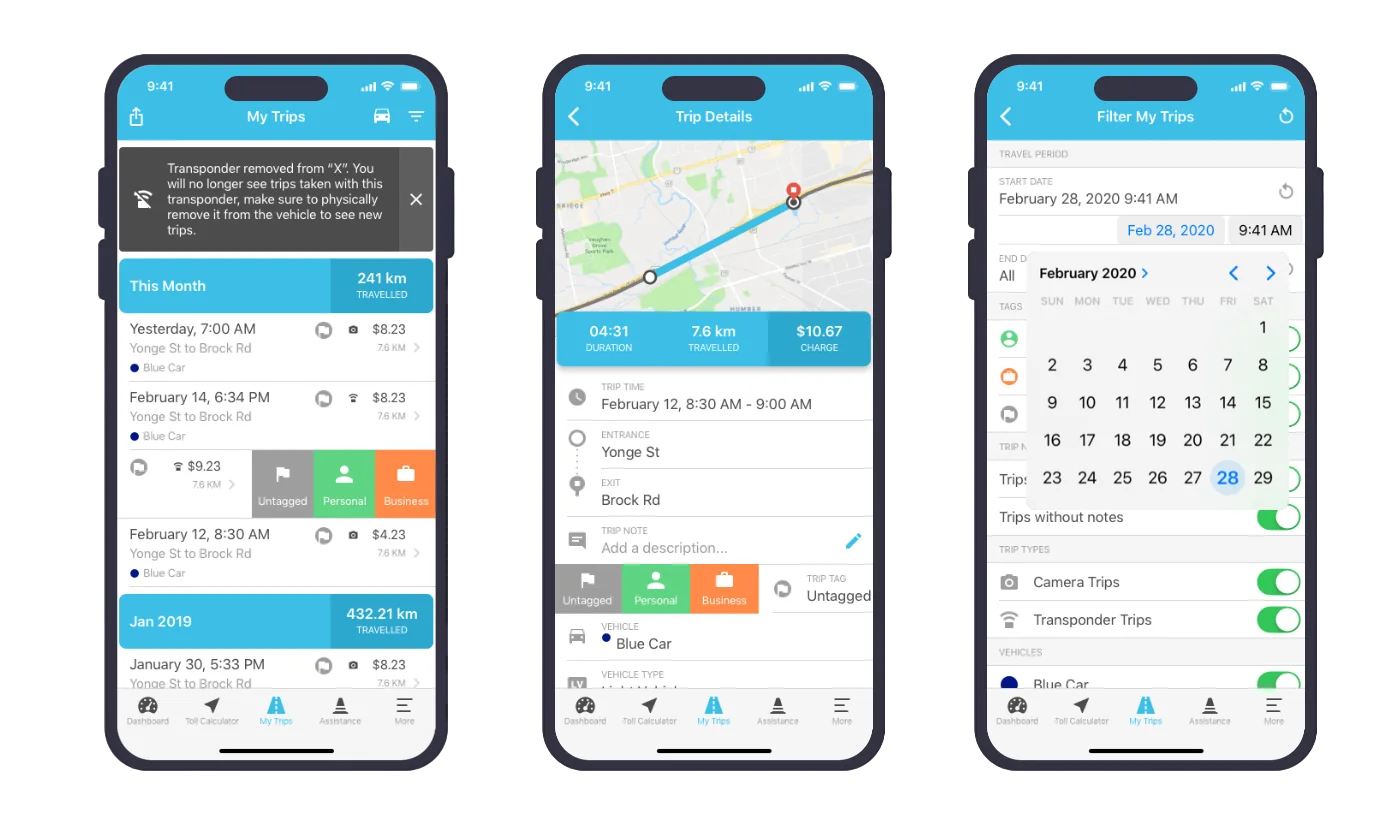
Know what you are spending
Working with business and technology teams, we engineered a way to show up-to-date travel information in the app immediately, letting customers watch their total travel spend and avoid the surprise bill at the end of the month.
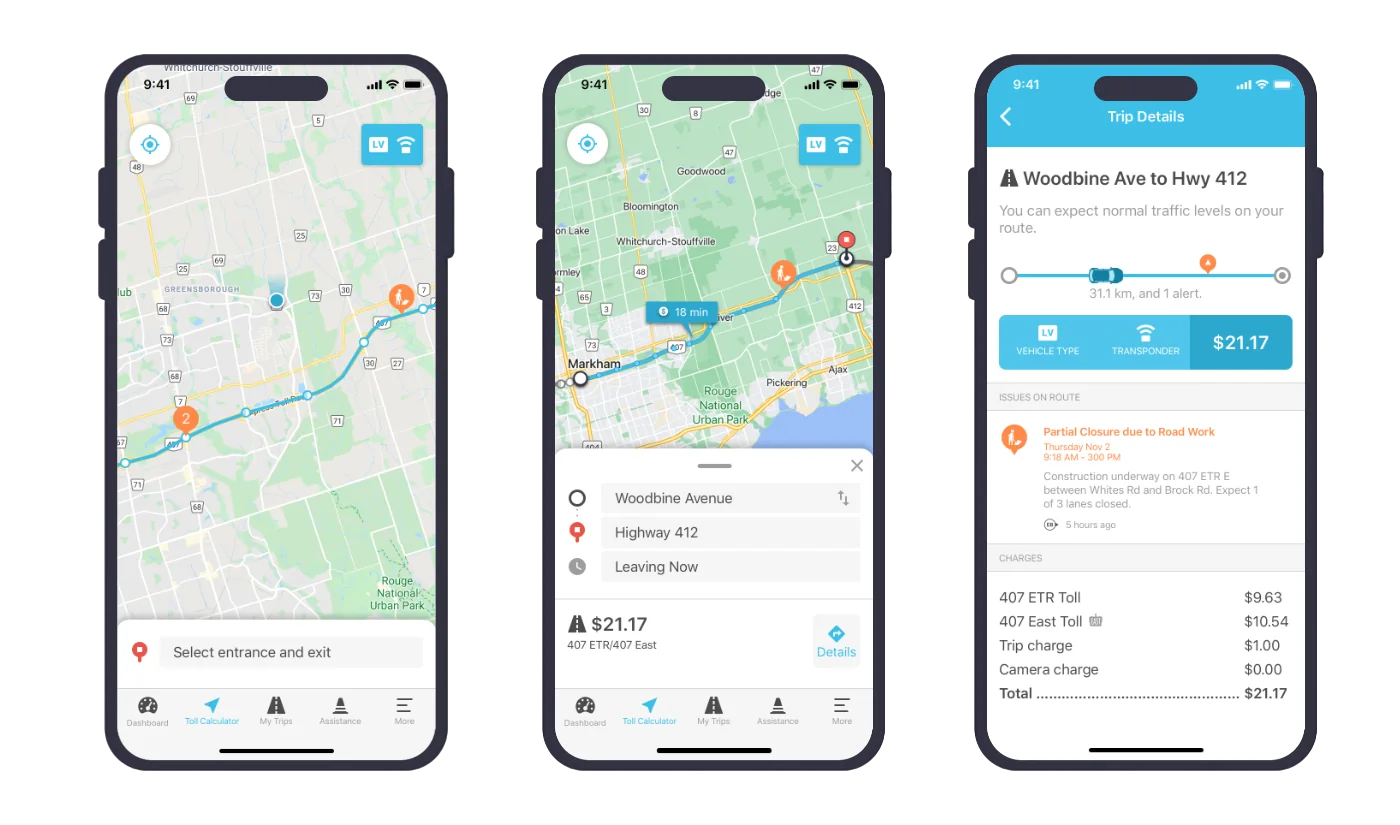
Plan before you go
Trip planning shows the cost of a trip before travelling. It was first considered as full turn-by-turn navigation, but user testing showed the value was in the entrance-to-exit toll cost, not in routing. Staying in our lane let us deliver full value without pulling customers away from the navigation tools they already prefer.
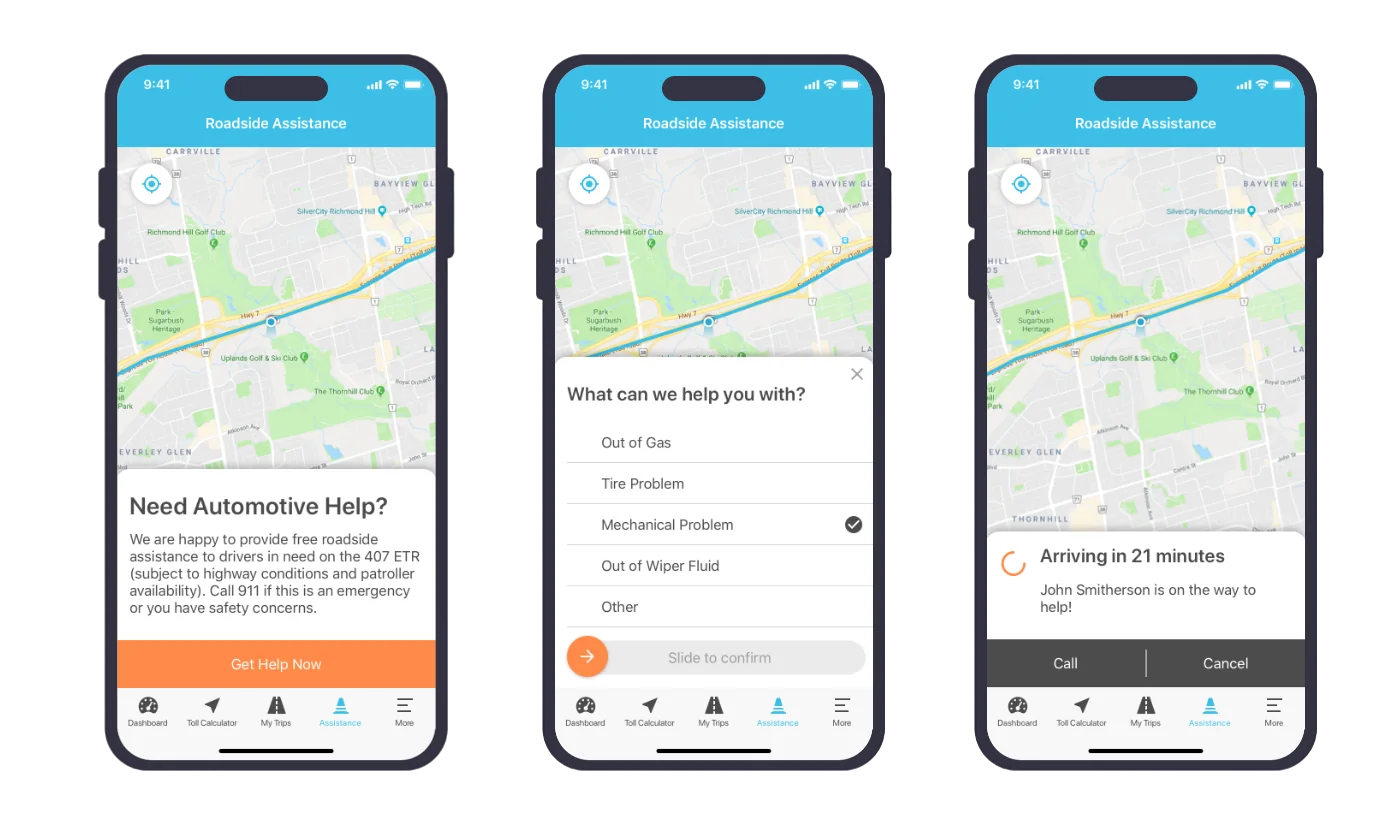
Help when it matters
To support the company's safety pillar, we integrated a real-time request for assistance, connecting stranded drivers directly with the operations centre.
Engagement by design
From the start, we aimed for a long-lived product rather than a short marketing piece, so engagement was central to the design.
Interactive cards
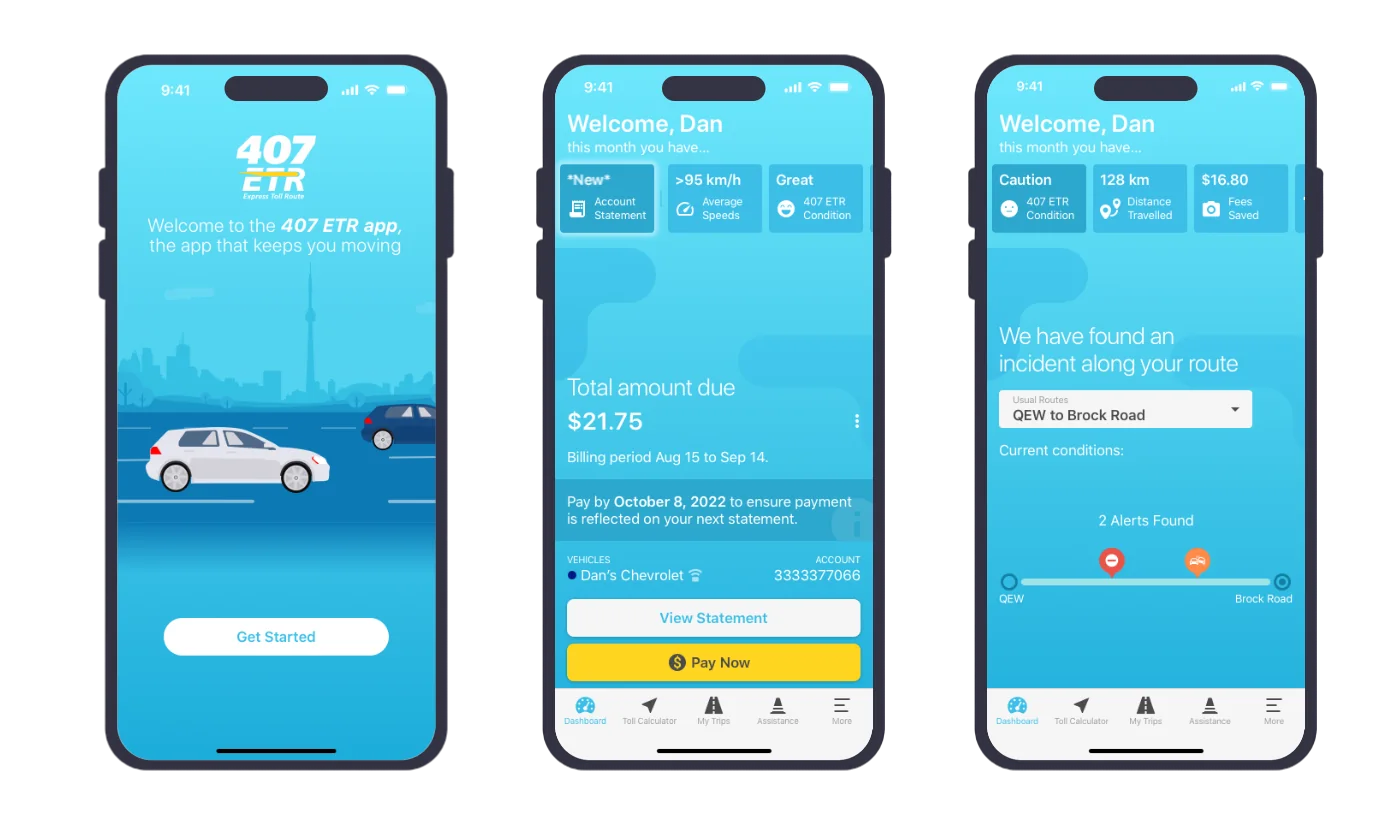
Starting with onboarding and interactive landing pages, we gave customers a set of animated, interactive cards that present their travel information in fun and informative ways.
Soft rewards
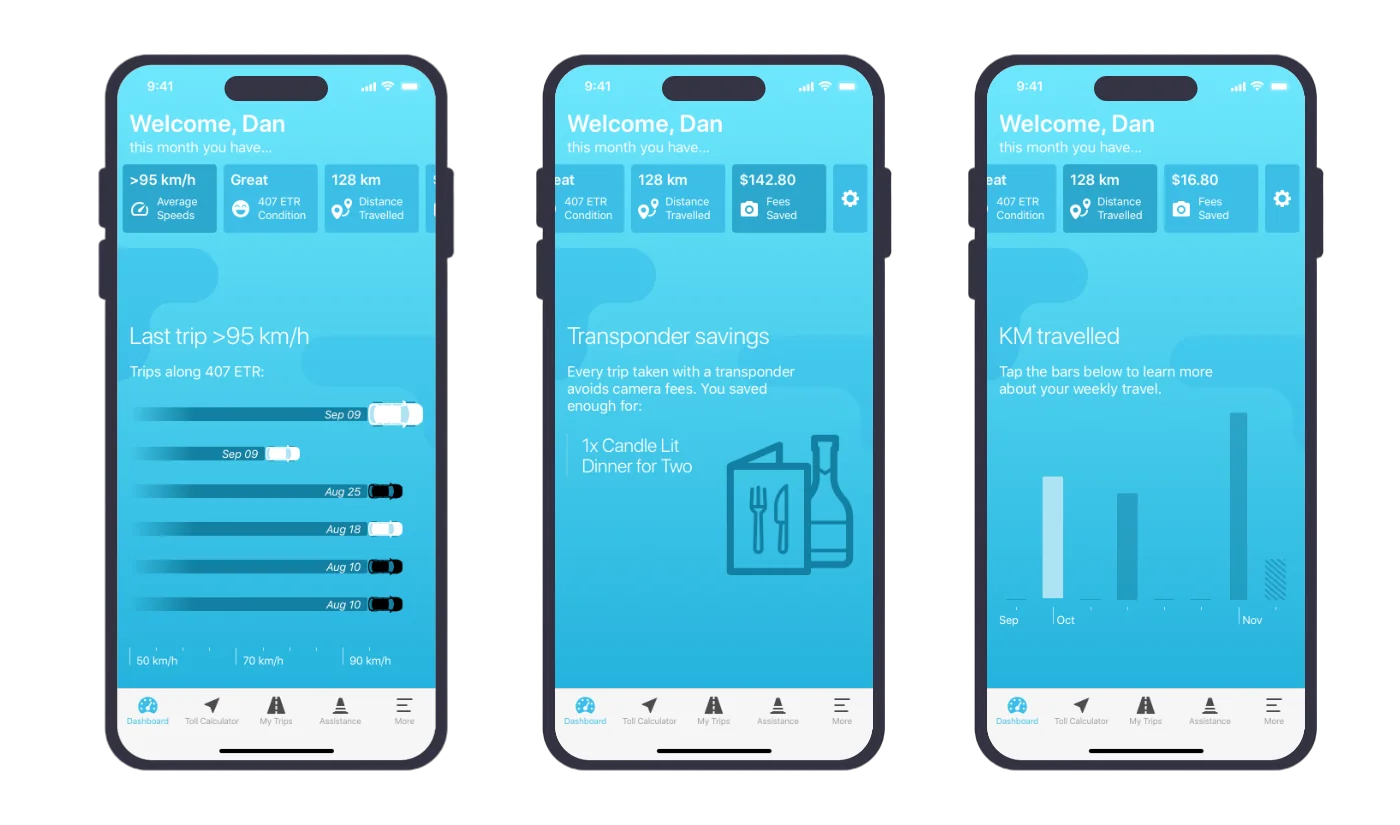
A formal rewards program was already being refreshed in parallel, so it was held out of the initial releases. Instead, we introduced soft rewards: game-like elements tied to a key customer metric, time savings, with many further concepts prepared for release once physical rewards were added.
Real-time notifications
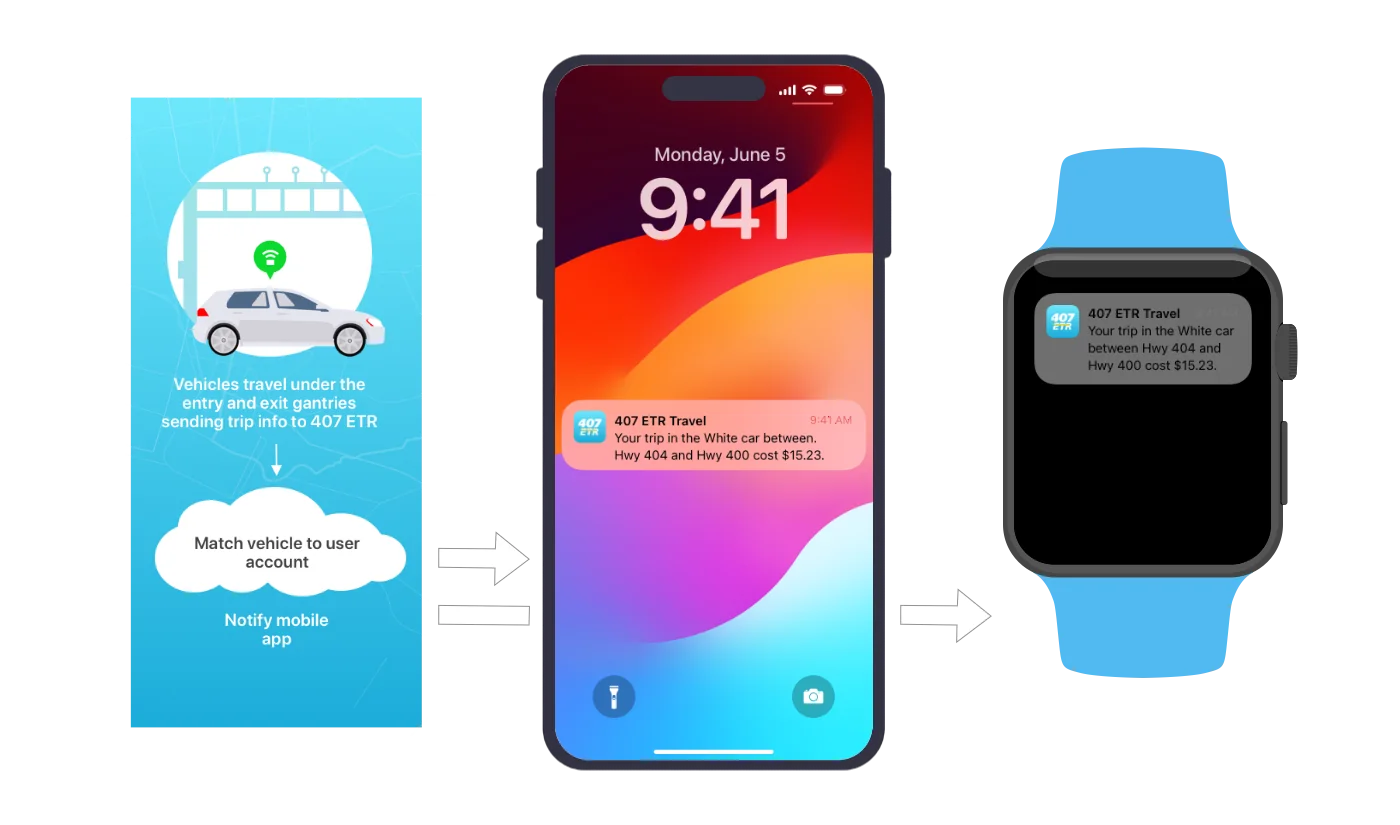
One of the clearest wins was real-time notification of travel. By using mobile notifications and connected smartwatches, customers receive immediate trip details and costs on their phone and wrist.
Converting customers to mobile payments
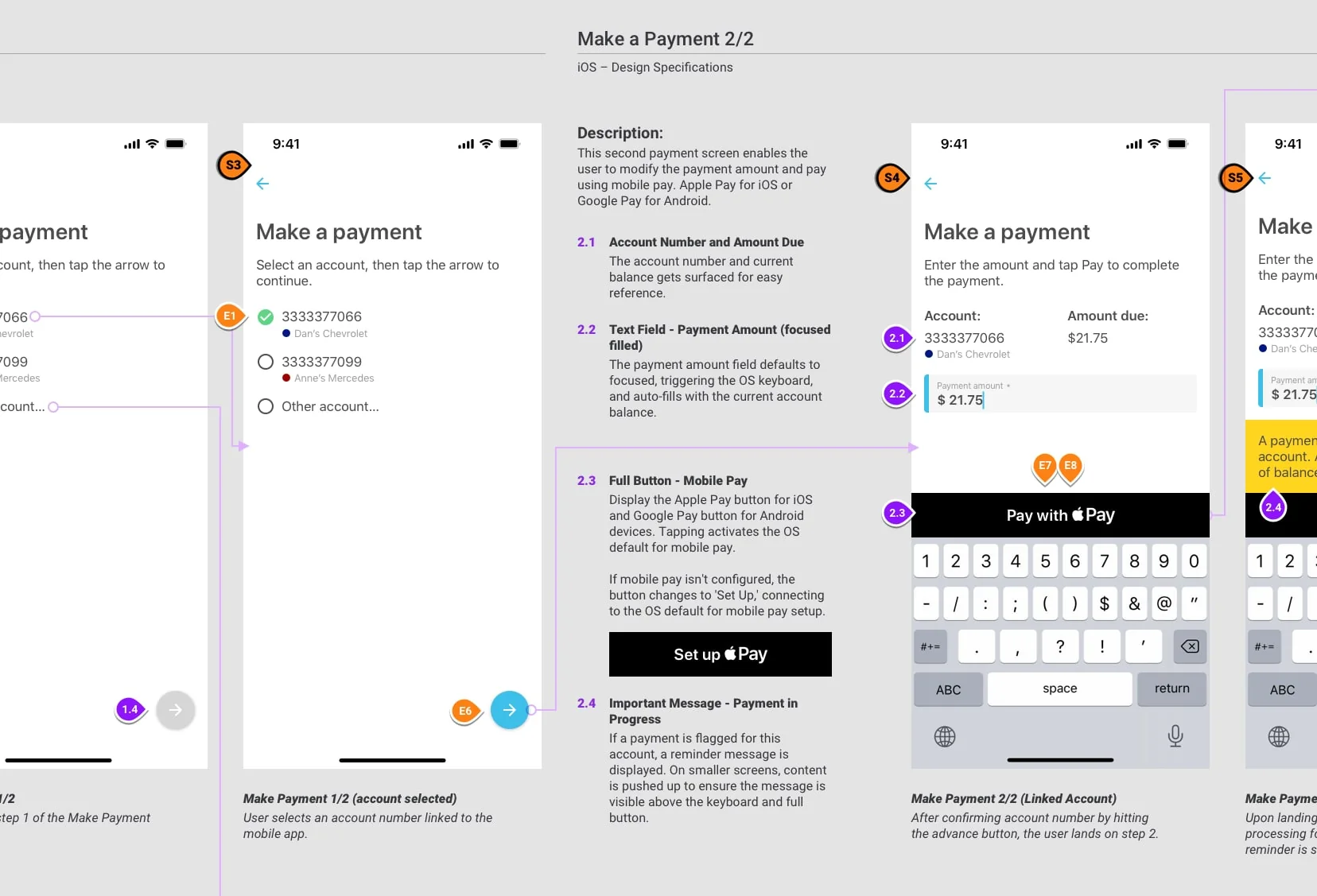
A secondary goal, and the business case for continued investment, was moving customers from monthly payments triggered by paper mail to mobile payments throughout the billing cycle. Paired with a shift from mailed to digital statements, this would create considerable operating savings for 407 ETR.
We tested payment options with the customer base to learn which inspired the most confidence and felt the least complicated. The winner was payment through the mobile platforms, Apple Pay and Google Pay, which offer near single-tap checkout and were seen as safe and secure. They carry additional transaction costs, but the business case showed that the gain in transactions outweighed the added percentage.
After launch, the change shifted 407 ETR's payment channel mix quickly and significantly. It also gave less frequent drivers a fast way to pay and avoid a surprise statement weeks after travel, and it opens the door to a pay-as-you-go model as the business moves further from traditional monthly billing.
Impact and results
The 407 ETR app is live on the Apple App Store and Google Play as a top-rated app. At the close of my involvement it held a rating above 4.7 and ranked #14 in the Navigation category across Canada, a strong result for an app useful primarily to residents and regular visitors of the Greater Toronto Area. It now serves 500K users and processes $2.5M in monthly transactions.
The app remains native at a time of cross-platform frameworks. Where budget allows, I believe native builds are worth it, because they leave the most room for innovation and creativity.
Leadership perspective
- Protect customer trust. Customers are highly sensitive to systems that expose tracking information such as speed of travel. Good design avoids surfacing data that creates unease.
- Balance customer and business needs. Customer desires and business requirements are often in tension, especially against years of business logic and architectural constraints. The skill is finding a balanced solution between them.
- Leadership unlocks innovation. With the right team and business leadership, innovative change is possible in any domain. We pushed how a service company engages its customers and created something truly special.